CarSales vs Facebook Marketplace 2026 — Which Is Safer for Buying a Used Car in NSW?
Both platforms sell real cars from real sellers. Both platforms host real scammers. Neither verifies vehicle condition and neither takes responsibility if you get burned. Here's what actually changes between them in 2026 — and the workflow that makes either one safe.
- Reviewed by
- NSW Pink Slip Review Panel
- Published
- 23 May 2026
- Updated
- 24 July 2026
- Read time
- 10 min
The used-car market in NSW has consolidated onto three private-sale platforms: CarSales (dominant paid listings), Facebook Marketplace (free, huge volume) and Gumtree (declining, still meaningful). Each attracts a slightly different seller mix and a slightly different scammer mix. Understanding which is which matters — and the workflow that protects you is broadly identical, regardless of the platform.
CarSales — paid, structured, higher-quality listings
CarSales charges sellers per listing (~$60 for a private sale) and forces a structured format: year, make, model, variant, transmission, kilometres, colour, registration, features. That listing fee alone is a filter — sellers with something to hide are less likely to pay $60 to get scrutinised, and repeat scammers get flagged and banned faster.
- Better structured data — no rego, no listing.
- Built-in RedBook valuation on most listings.
- PPSR check available as an add-on at checkout.
- Persistent seller history — you can see other listings from the same seller.
- Prices typically 5–10% higher than the same car on Facebook Marketplace.
- Dealer and private-sale listings clearly distinguished.
- Photos are required and typically higher quality.
- Refund/dispute process exists but is slow and rarely resolves in the buyer's favour.
Facebook Marketplace — free, huge volume, mixed quality
Free listings mean everyone from a genuine private seller to a hobbyist car flipper to a full-blown scam operator uses it. Volume is higher than CarSales; the useful information per listing is lower. Facebook's identity system (real names, profile history) provides some social verification, but only for sellers whose profiles are actually established.
- Lower prices — same car often 5–10% cheaper than CarSales.
- Wider range of listings including cars owners never bothered to put on CarSales.
- Higher scam density — anticipate 20–30% of enquiries being time-wasters or scammers.
- Seller profile inspection required — new profile, no friends, only marketplace activity = walk away.
- Facebook takes no responsibility for the transaction; no dispute mechanism.
- Photos often poor quality or missing.
- Rego status often not disclosed — you have to ask.
- Location often vague; sellers sometimes list "Sydney" when the car is 90 minutes out.
Gumtree — declining but still meaningful
Gumtree used to dominate private sales, but has lost ground to Facebook Marketplace and CarSales. It still lists cars — often older, cheaper cars from a slightly different seller demographic. Same free-listing model, same scam density challenges. The platform's own protections are minimal. Use the same workflow as Facebook Marketplace.
The scam patterns on each platform
CarSales
- "Shipping" scams where the 'seller' claims to be interstate and will 'ship the car after payment via [escrow service]'. Universal red flag — real interstate sales require your inspector or an agent to physically see the car before payment.
- Cloned listings — a scammer copies a legit listing from another platform and reposts. Reverse image search on the photos usually reveals this.
- Under-market price on a desirable model as a hook to move you to off-platform payment channels.
- "Deceased estate must sell" story to justify a below-market price and rush the buyer.
- Fake escrow service linked in the seller message — never use any escrow the seller suggests.
Facebook Marketplace
- Deposit-then-disappear — asks for a deposit to 'hold the car', then the profile disappears.
- "Prepared to sell for less if you can pick up tonight" high-pressure tactics.
- Selling one car with photos of a different (better) car — always demand video walk-around before travelling.
- "Seller" using a hacked genuine account with an established profile. Cross-check by asking a question about a personal detail on their public profile.
- Wrong-name transfer — the seller isn't actually the registered owner; the rego papers don't match the person you're paying.
- "Interstate transport at buyer's cost" scams — legitimate-looking transport company that doesn't exist.
- Odometer discrepancy — the listing km doesn't match the actual dashboard reading.
Safe workflow (works on both platforms)
- Contact through the platform's messaging, not phone/text on first contact. Screenshots protect you.
- Confirm the seller has ID matching the rego before you drive anywhere. Ask for a photo of the driver's licence held against the rego papers.
- Run a $2 PPSR check on the VIN before travelling. Do it independently at ppsr.gov.au — not any "PPSR" link the seller sends.
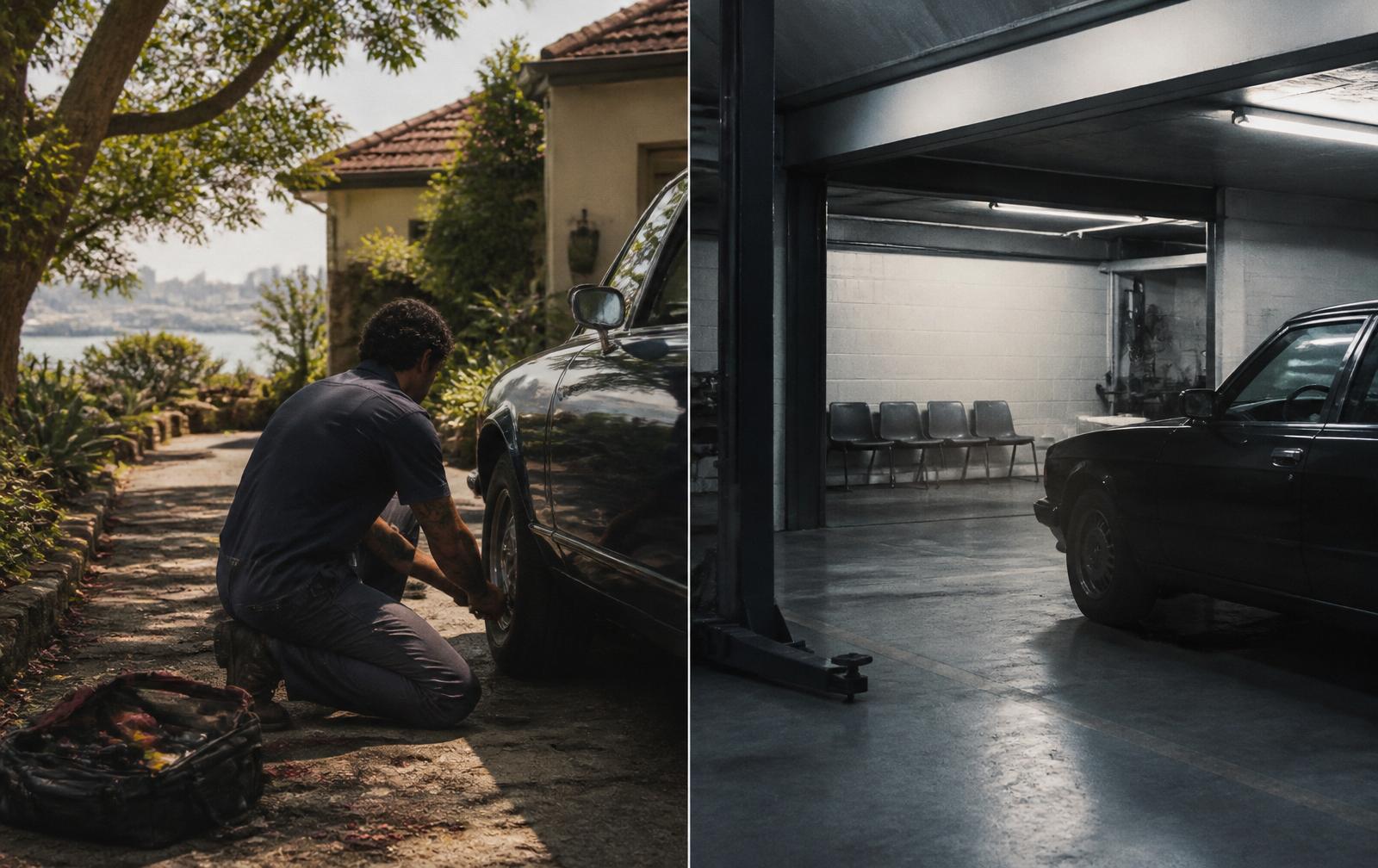
- Inspect during daylight, at the seller's home address (never a car park, never a service station).
- Verify the address is genuinely the seller's — a Google Maps look and ideally checking with a neighbour if plausible.
- Never send a deposit before physically seeing the car.
- Book an independent pre-purchase inspection ($280 flat) before committing to buy — we come to the seller's address, deal with the seller directly, and hand you a report on the spot.
- Pay by bank transfer or PayID with funds cleared in your account before taking possession of the vehicle.
- Take receipt of physical rego papers, service history and both keys at handover. Sign the Notice of Disposal on the spot.
- Lodge the transfer at Service NSW within 14 days.
Which platform to use — by budget
- Under $10,000 budget: Facebook Marketplace has the volume. Accept the higher scam density; use the workflow above rigorously.
- $10,000–$25,000: Both platforms; CarSales usually has better listing quality; Facebook has better prices. Search both, filter aggressively.
- Over $25,000: CarSales dominates for cars in this range. The higher-quality listings pay for themselves in reduced enquiry filtering time.
- Any budget: never buy without an independent pre-purchase inspection. The $280 for the inspection is small money against the platform-agnostic risk of a bad car.
Red flags common to both platforms
- Price 20%+ below RedBook average without a clear reason.
- Seller "urgent to sell — leaving the country".
- Seller refuses to allow independent inspection.
- Seller wants payment before viewing.
- Rego papers "at the printer / lawyer / interstate".
- Seller won't provide the VIN pre-viewing so you can PPSR-check.
- Photos don't match the current model year (facelift mismatch).
- Seller pushes cryptocurrency, PayPal Friends & Family, or Western Union.
- Communication moves to WhatsApp or Signal immediately.
- Seller lists first name only and gives no callback number.
Safe payment methods ranked
- PayID or bank transfer with cleared funds visible in your account before you drive away — safest. Instant traceable.
- Bank cheque presented at a bank branch — safe but slower.
- Cash for amounts under $10,000 — legal but risky (theft, counting errors, cash-reporting thresholds).
- Credit card — rarely accepted for private sales; chargeback protection helps though.
- PayPal Goods & Services — some protection, but rare for cars.
- Never: PayPal Friends & Family, cryptocurrency, Western Union, gift cards, seller-suggested escrow.
What each platform does not verify
- Neither platform verifies vehicle condition.
- Neither platform verifies odometer accuracy.
- Neither platform verifies the seller is the registered owner.
- Neither platform runs a PPSR check on your behalf.
- Neither platform confirms the car exists at the advertised location.
- Facebook doesn't verify the seller's identity beyond their existing profile.
- CarSales doesn't verify anything beyond payment for the listing.
Every verification is on you or your independent inspector. The $280 pre-purchase inspection covers what the platforms don't.
Frequently asked.
- Is Facebook Marketplace safe for buying a used car in NSW?
- Reasonably safe if you follow the standard used-car workflow: verify seller ID, PPSR check the VIN, inspect at the seller's home in daylight, book an independent pre-purchase inspection before committing, and pay by bank transfer with cleared funds. Scam density is higher than CarSales but the workflow protects you.
- Is CarSales safer than Facebook Marketplace?
- Slightly — the paid listing model and structured seller history filter out casual scammers. But CarSales has its own scam patterns (particularly interstate shipping scams) and the safe-purchase workflow is the same on both platforms.
- Should I pay a deposit to hold a car on Facebook Marketplace?
- No — never send money before physically inspecting the car and verifying the seller's ID and rego papers. 'Deposit to hold' is a common scam pattern.
- Are the prices lower on Facebook Marketplace than CarSales?
- Typically 5–10% lower for the same car. The listing is free, so sellers don't have to price in the listing fee, and the platform attracts more casual sellers.
- What's the safest way to pay for a used car online?
- Bank transfer or PayID with funds CLEARED in your account before taking possession. Not cash for amounts over $10,000. Never PayPal Friends & Family, personal cheque, cryptocurrency, or 'escrow' services suggested by the seller.
- Do you inspect cars from Facebook Marketplace and CarSales listings?
- Yes — we inspect any private-sale car anywhere in Sydney, Wollongong, Central Coast and Blue Mountains. Flat $280 inc GST regardless of where the car was listed.
- What does a PPSR check cost?
- $2 direct from the government at ppsr.gov.au. It reveals finance owing, write-off history, and stolen status. Never trust a PPSR link the seller sends — always run it yourself.
- Can I trust a seller with a long Facebook history and mutual friends?
- It reduces scam risk substantially but doesn't verify vehicle condition. Even a genuine seller may not know what's wrong mechanically. An independent inspection remains essential.
- What if the seller wants to meet in a public car park?
- Politely insist on the seller's home address for the inspection. Public meets are a common cover for stolen or non-existent cars. If the seller refuses, walk away.
- Should I trust CarSales's RedBook price valuation?
- As a rough benchmark, yes. RedBook price ranges are based on wholesale/retail averages; the actual market price varies with condition, kilometres, colour and options. Use RedBook as one data point, not the answer.
- What if the car is listed cheaper than RedBook by 20%+?
- There's almost always a reason — mechanical fault, write-off history, urgent sale, or scam. Investigate before travelling. A PPSR check and phone conversation usually reveals it in 5 minutes.
- Do you cover interstate seller inspections?
- Yes for Sydney metro, Wollongong, Central Coast and Blue Mountains — the standard $280 flat rate applies. If the seller is genuinely interstate (VIC, QLD, etc.), we don't cover but can suggest reputable independent inspectors in those cities.
About the author
NSW Pink Slip — Lead Inspection Team
Lead AIS-Authorised eSafety Inspector · 18+ years
Our lead inspection team is Transport for NSW-authorised under the Authorised Inspection Scheme (AIS) to issue eSafety Checks (pink slips) for light vehicles up to 4.5t. Combined 18+ years of hands-on Sydney workshop experience — starting in general repair, moving through diagnostic specialisation on European and Japanese platforms, and settling into full-time mobile inspection since 2019. Every article on this site is authored or reviewed by a currently-authorised AIS examiner. If we can't verify a claim against a Transport for NSW or Service NSW source, it doesn't ship.
- ✓Transport for NSW authorised AIS examiner
- ✓Cert IV in Automotive Mechanical Diagnosis
- ✓Cert III in Light Vehicle Mechanical Technology
- ✓Cert III in Automotive Electrical Technology
- ✓Working with Children Check (WWC) verified
Reviewed by NSW Pink Slip Review Panel — Reviews every technical article for accuracy against current Transport for NSW rules, AIS inspector guidelines and manufacturer service data.
Meet the full inspection team →