Blue Slip NSW 2026 — What It Is, When You Need One, Cost, Validity & AUVIS Process (Complete Guide)
A blue slip is not "a bigger pink slip". It's a completely different inspection at a completely different type of station — AUVIS instead of AIS — and it's the paperwork you need to bring an unregistered, interstate or heavily modified vehicle onto NSW roads. Here's exactly when you need one, what the inspector actually does, what it costs in 2026, and every situation where a $179 pink slip is all you actually need instead.
- Reviewed by
- NSW Pink Slip Review Panel
- Published
- 15 April 2026
- Updated
- 24 July 2026
- Read time
- 11 min
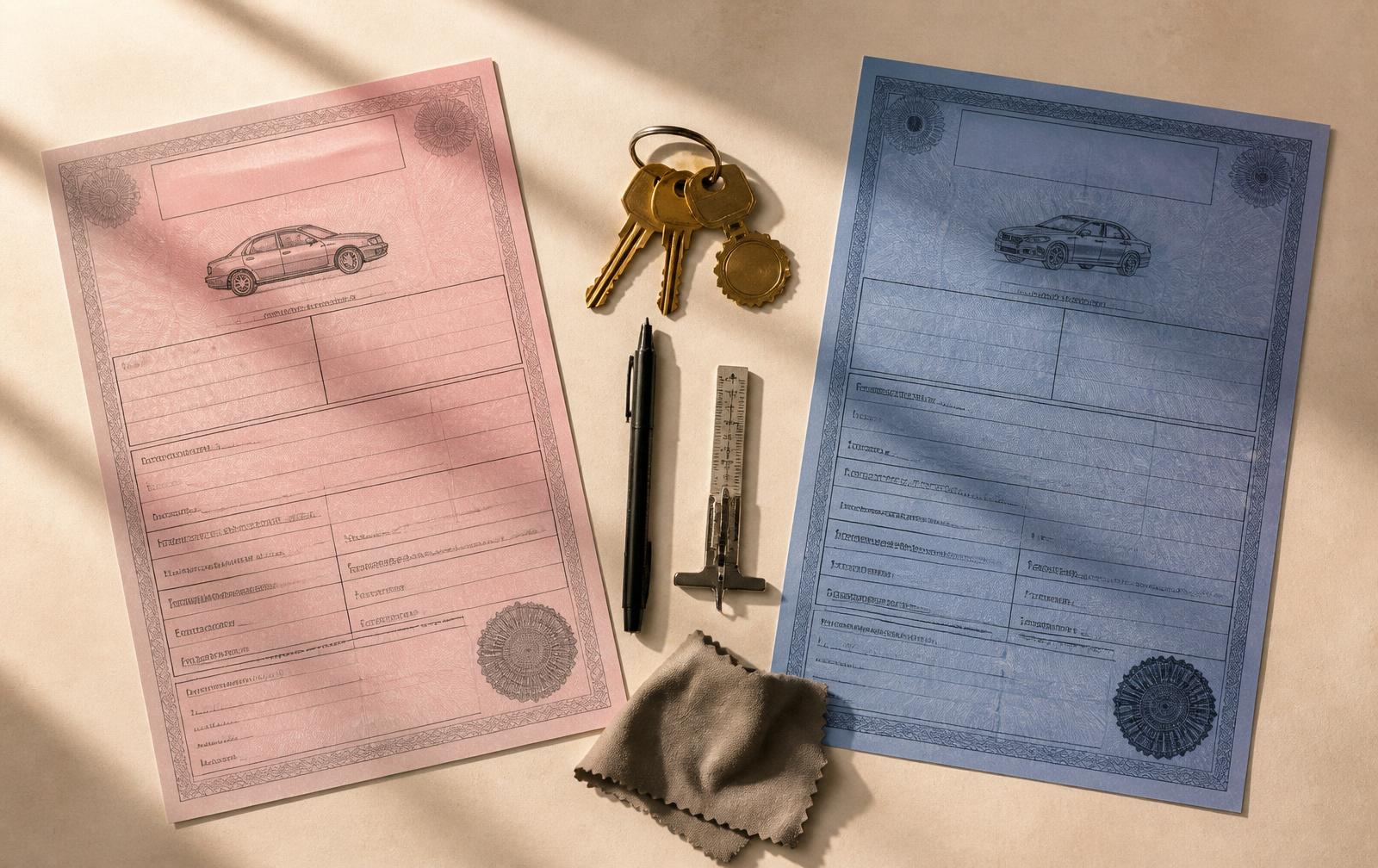
If Service NSW or a dealer told you that you need a "blue slip", the temptation is to book a pink slip and hope it's the same thing. It isn't. A blue slip is a full identity and roadworthy check carried out only by an AUVIS (Authorised Unregistered Vehicle Inspection Scheme) station — a specific subset of NSW inspection stations authorised specifically for previously-unregistered work. This guide walks through when you actually need one, exactly what the inspector does, what it costs, and — importantly — when a $179 pink slip is all you need instead.
The one-line difference
A pink slip is a periodic safety check on a currently-registered NSW vehicle. A blue slip is a first-registration or re-registration inspection that also verifies vehicle identity, ensures the car is legal to be on the road at all, and checks safety to a higher standard than a pink slip.
When you need a blue slip (six situations)
- The vehicle has never been NSW-registered — bought new via personal import, brought back from overseas, or built from scratch.
- The vehicle is being transferred into NSW from another state or territory — VIC, QLD, ACT, SA, WA, TAS or NT plates coming across the border.
- The vehicle's NSW rego has lapsed for more than 3 months. Under 3 months you can reinstate with a pink slip; past the grace period the vehicle is treated as freshly unregistered and needs a blue slip.
- The vehicle has had structural modifications requiring engineering (VSI/VSCCS) or has been rebuilt from a written-off status.
- The vehicle has had its VIN or engine number altered, or is being registered from a bare chassis / kit-car build.
- The vehicle is being taken out of long-term storage and returned to registration, and the storage period pushed it past the grace window.
When you don't need a blue slip (a $179 pink slip is enough)
- Standard annual rego renewal on a car that's stayed continuously registered — pink slip.
- Any current NSW-registered car 5+ years old at renewal — pink slip.
- You bought a used car from another NSW owner with valid rego — pink slip at the next renewal only.
- Rego lapsed less than 3 months ago — pink slip, plus a small late-payment charge.
- Cosmetic modifications (wheels within tyre placard, cosmetic body kit, audio) that don't require engineering — pink slip.
The blue slip inspection — what an AUVIS inspector actually does
A blue slip is materially more thorough than a pink slip because the station has to certify not just that the vehicle is currently safe but that its identity is genuine and its overall condition warrants first-time (or first-time-in-NSW) registration. Broad structure of the inspection:
- Vehicle identity — full VIN cross-check against Personal Property Securities Register (PPSR) and against Transport for NSW records to make sure it's not a rebadged write-off or stolen vehicle. Engine number cross-checked. Compliance plate examined for authenticity.
- Structural integrity — chassis rails, subframe mounts, crumple zones. Rust and prior collision repair examined much more carefully than a pink slip.
- Roadworthiness — the full pink slip checklist (25 items) as a subset.
- Modification compliance — any modifications must carry appropriate engineering certificates. Non-compliant mods are called out for correction.
- Standards conformance — for imported vehicles, that ADR (Australian Design Rules) conformance is verified either through original compliance or through a subsequent compliance report.
- Emissions — OBD-II scan plus any additional visual emissions items depending on vehicle age.
- Odometer verification — cross-check odometer against PPSR history for obvious tamper.
Blue slip fees
- Minimum fee: $78 for a straightforward light vehicle blue slip.
- Higher for larger or more complex vehicles (heavy vehicles, complex imports, motorhomes).
- Higher again for vehicles requiring additional identity checks or engineering verification.
- Re-inspections after failure: often at a discounted rate but not free.
Blue slip fees are not regulated in the same rigid way pink slip fees are. Each AUVIS station sets its own price above the $78 minimum based on scope. Get two quotes before booking a complex blue slip (import, heavily modified, or restored vehicle).
Validity
A blue slip is valid for 42 days from issue. That's tight compared to a pink slip's 6 months, and it's a deliberate design — the blue slip window exists specifically to let you get to Service NSW and register (or transfer) the vehicle. If you go past 42 days without registering, you'll need another blue slip.
Where blue slips are done (AUVIS ≠ AIS)
AIS (Authorised Inspection Station) does pink slips. AUVIS (Authorised Unregistered Vehicle Inspection Station) does blue slips. Some stations are both, many are only one. Mobile blue slip options are much more limited than mobile pink slip because of the identity-verification and paperwork side. The Transport for NSW station finder filters by AUVIS specifically.
Interstate transfer — the most common blue slip scenario
The single most common blue slip we hear about is an interstate move: someone relocating to NSW with their VIC or QLD-plated car. Process:
- Take the car (still on its interstate plates) to an AUVIS station. Bring rego papers, ID, and any modification / engineering documentation.
- Blue slip inspection completed. If it passes, you get an eSafety Check certificate (blue slip) valid 42 days.
- Take the blue slip, ID, and proof of NSW address to Service NSW.
- Pay NSW rego and CTP (green slip — purchased from any CTP insurer beforehand).
- Receive NSW plates. The interstate plates must be surrendered to the previous state or cancelled through NSW's process.
From that point on, the vehicle is on the standard NSW pink slip cycle from age 5. The blue slip only ever needs to happen once per interstate move.
Import scenario
Personal import (e.g. RHD conversion from Japan or UK) is the most complex blue slip scenario. In addition to the standard blue slip, the vehicle must have been compliance-plated or covered by an approved import scheme. Documentation package for the inspector will include:
- Import approval certificate.
- Compliance report or SEVS/RAWS documentation (whichever applies).
- Bill of lading, purchase documentation, and any engineering certificates from RHD conversion or safety compliance work.
- Original title document if available (translated if not in English).
Budget more time and money for import blue slips — this is specialist work and only a subset of AUVIS stations handle it well. Get a recommendation before booking.
Lapsed-rego scenario
If your rego has been expired more than 3 months, Service NSW system treats the vehicle as unregistered and blocks the standard pink slip renewal path. You'll be told at the counter (or online) that a blue slip is required. This catches out a lot of people who had a second car sitting in the driveway, expired rego for a year, and now want to legally drive it again.
The workaround is to catch up in time: if your rego lapses, get onto the renewal within 3 months to avoid the blue slip requirement.
Modified vehicle scenario
Any modification that affects safety, structure or emissions requires engineering approval (VSI or VSCCS) and — the first time the modified configuration is registered — a blue slip that specifically checks the mod against the engineering paperwork. Common examples: LPG/dual-fuel conversions, chassis-modified 4WDs (wheelbase or suspension geometry changes), turbo/supercharger installs not offered from factory, engine swaps.
Cosmetic modifications (wheels within placard, subtle body kit, audio upgrades) don't need a blue slip. Only mods that affect the compliance envelope.
Common blue slip fails (they're different to pink slip fails)
- Rust — much stricter than pink slip. Any rust in structural members (chassis rails, sill panels, strut towers) fails; surface rust in non-structural panels may or may not fail depending on inspector.
- Undocumented modifications — the number one blue slip trap for import buyers.
- VIN visibility issues — the VIN plate must be present, legible, and match the paperwork. Faded, damaged or repositioned plates fail.
- Unrepaired collision damage — anything the inspector flags as safety-affecting fails until repaired.
- Mismatched documentation — different VIN on paperwork than on plate, or engine number mismatch. Requires resolution before the blue slip can complete.
How to prep for a blue slip (day-before checklist)
- Gather every piece of paperwork — original rego, ID, engineering certificates for any modifications, import documentation, service history if relevant.
- Wash the car so the VIN plates, engine numbers and chassis rails are clearly visible.
- Fix known safety items — brake pads, tyres, wiper blades, all lights.
- Do a rust walk-around especially in structural areas — sill panels underneath, strut towers under bonnet, chassis rails from underneath.
- Have a PPSR check printed. It's not required for the blue slip but resolves questions instantly.
- Book with an AUVIS station that specifically handles your vehicle type — imports, heavily modified 4WDs, motorhomes all benefit from specialist AUVIS.
Blue slip vs pink slip — head-to-head
| Feature | Pink slip (AIS) | Blue slip (AUVIS) |
|---|---|---|
| Purpose | Annual safety check | Identity + roadworthy for registration |
| When | Existing NSW rego, 5+ years old | First rego / interstate / lapsed / modified |
| Regulated fee | $51 | $78 minimum, variable |
| Mobile available | Yes (our specialty) | Rare — mostly workshop |
| Validity | 6 months | 42 days |
| Verifies vehicle identity | No | Yes (VIN, engine, PPSR) |
| Inspection scope | 25-item safety | Safety + identity + compliance |
Frequently asked.
- What is a blue slip in NSW?
- A blue slip (formally: AUVIS certificate) is an unregistered vehicle inspection required for first NSW registration, interstate transfers, lapsed rego over 3 months, structurally modified vehicles, and imports.
- How much does a blue slip cost in NSW?
- Minimum fee is $78 for a straightforward light vehicle. Fees are not tightly regulated — expect higher pricing for imports, motorhomes, heavy vehicles and complex modifications.
- How long is a blue slip valid?
- 42 days from issue. This is intentionally short — the window exists to let you get to Service NSW and register the vehicle. Past 42 days you'd need another blue slip.
- What's the difference between a pink slip and a blue slip?
- A pink slip is the annual safety check on a currently-registered vehicle. A blue slip is a first-registration / re-registration inspection that also verifies vehicle identity and is more thorough on structural condition.
- Where can I get a blue slip in NSW?
- Only at an AUVIS-authorised station. Not every AIS station is AUVIS — use the Transport for NSW station finder and filter for AUVIS specifically.
- Do I need a blue slip if I moved from Victoria to NSW?
- Yes — any interstate transfer into NSW requires a blue slip on first NSW registration. The car keeps its interstate plates until the blue slip is done and Service NSW issues NSW plates.
- My rego lapsed 2 years ago — pink slip or blue slip?
- Blue slip. Past the 3-month grace period, the vehicle is treated as freshly unregistered and needs a full blue slip inspection to return to the road.
- Can a mobile inspector do a blue slip?
- Very rare — most AUVIS work is done at workshops because of the identity paperwork and full-inspection setup. Almost all mobile inspection availability in Sydney is for pink slips, not blue slips.
- Do I need a blue slip if I modified my suspension?
- Only if the modification requires engineering (VSI/VSCCS certification). Small cosmetic mods don't. Any structural modification does.
- Do I need a blue slip for a car I imported personally?
- Yes — personal imports need a blue slip alongside all import compliance paperwork. Use an AUVIS station that specialises in imports.
- Does a blue slip include a PPSR check?
- The inspector does an identity cross-check but you should also run your own PPSR check before purchase to reveal finance owing, write-off history and theft records.
About the author
NSW Pink Slip — Lead Inspection Team
Lead AIS-Authorised eSafety Inspector · 18+ years
Our lead inspection team is Transport for NSW-authorised under the Authorised Inspection Scheme (AIS) to issue eSafety Checks (pink slips) for light vehicles up to 4.5t. Combined 18+ years of hands-on Sydney workshop experience — starting in general repair, moving through diagnostic specialisation on European and Japanese platforms, and settling into full-time mobile inspection since 2019. Every article on this site is authored or reviewed by a currently-authorised AIS examiner. If we can't verify a claim against a Transport for NSW or Service NSW source, it doesn't ship.
- ✓Transport for NSW authorised AIS examiner
- ✓Cert IV in Automotive Mechanical Diagnosis
- ✓Cert III in Light Vehicle Mechanical Technology
- ✓Cert III in Automotive Electrical Technology
- ✓Working with Children Check (WWC) verified
Reviewed by NSW Pink Slip Review Panel — Reviews every technical article for accuracy against current Transport for NSW rules, AIS inspector guidelines and manufacturer service data.
Meet the full inspection team →Related from the workshop.
Pink Slip vs Blue Slip NSW 2026 — Which One Do You Actually Need? (Two-Minute Rule + 12 Scenarios)
What Is a Pink Slip in NSW? The 2026 eSafety Check Explained (Plain English)