Odometer Fraud in Australia 2026 — How to Spot a Wound-Back Car (7 Red Flags)
A wound-back odometer adds $2,000–$8,000 of imaginary value to a used car — and modern digital dashes are easier to tamper with than the mechanical ones they replaced. Here's how the fraud works, the seven signs an inspector spots in the first ten minutes, and the historical checks that catch it every time.
- Reviewed by
- NSW Pink Slip Review Panel
- Published
- 21 May 2026
- Updated
- 24 July 2026
- Read time
- 10 min
Odometer fraud — winding back the kilometres a car displays — is illegal under state and federal consumer protection law across Australia, with fines up to $500,000 for a corporation and criminal exposure for individuals. It also remains common on private used-car sales, particularly on cars in the 8–15 year old range where every 20,000 km wound off adds thousands to the private-sale price.
How digital odometers get tampered with (why it's easier now, not harder)
The intuition that digital dashboards would be tamper-proof turned out to be optimistic. On most vehicles built since ~2005, the odometer reading is stored in the instrument cluster's memory chip (EEPROM). Aftermarket "odometer correction" tools — sold openly online for $300–$1,500 — connect via the OBD-II port and rewrite the stored value in under five minutes. Modern cars mirror the reading in additional modules (engine ECU, gateway, key fobs) but many correction tools can update those too.
The counter-measures — cross-referencing with service records, tyre wear, brake pedal wear, seat wear — haven't kept pace. A skilled fraudster can wind an odometer, drive the car briefly to update the mirrored values, and present a plausible-looking low-km listing.
The seven signs of a wound-back odometer
1. Interior wear inconsistent with displayed kilometres
A car showing 60,000 km should look like a car with 60,000 km. Signs the reading doesn't match reality:
- Driver's seat bolster worn through or heavily shiny.
- Steering wheel worn smooth where the driver's hands sit at 3 and 9 o'clock.
- Gear knob smoothed or leather worn through.
- Pedal rubber worn through to the metal underneath, or replaced (a new-looking pedal rubber on an old car is a huge flag).
- Carpet worn through in the driver's footwell.
- Door armrest fabric shiny or worn.
- Seatbelt webbing fluffed or discoloured near the buckle.
2. Service history that doesn't add up
Manufacturer digital service records (available through most dealer service portals) log the odometer reading at each service. If the last service stamp shows 145,000 km and the odometer now reads 92,000 km, someone has wound it back — the record survives independent of the cluster memory. Where the service book is stamped by hand, look for entries that jump: if service 6 was at 88,000 km and service 7 is at 41,000 km, the car has been rolled back between services.
3. Tyre and brake wear inconsistent with kilometres
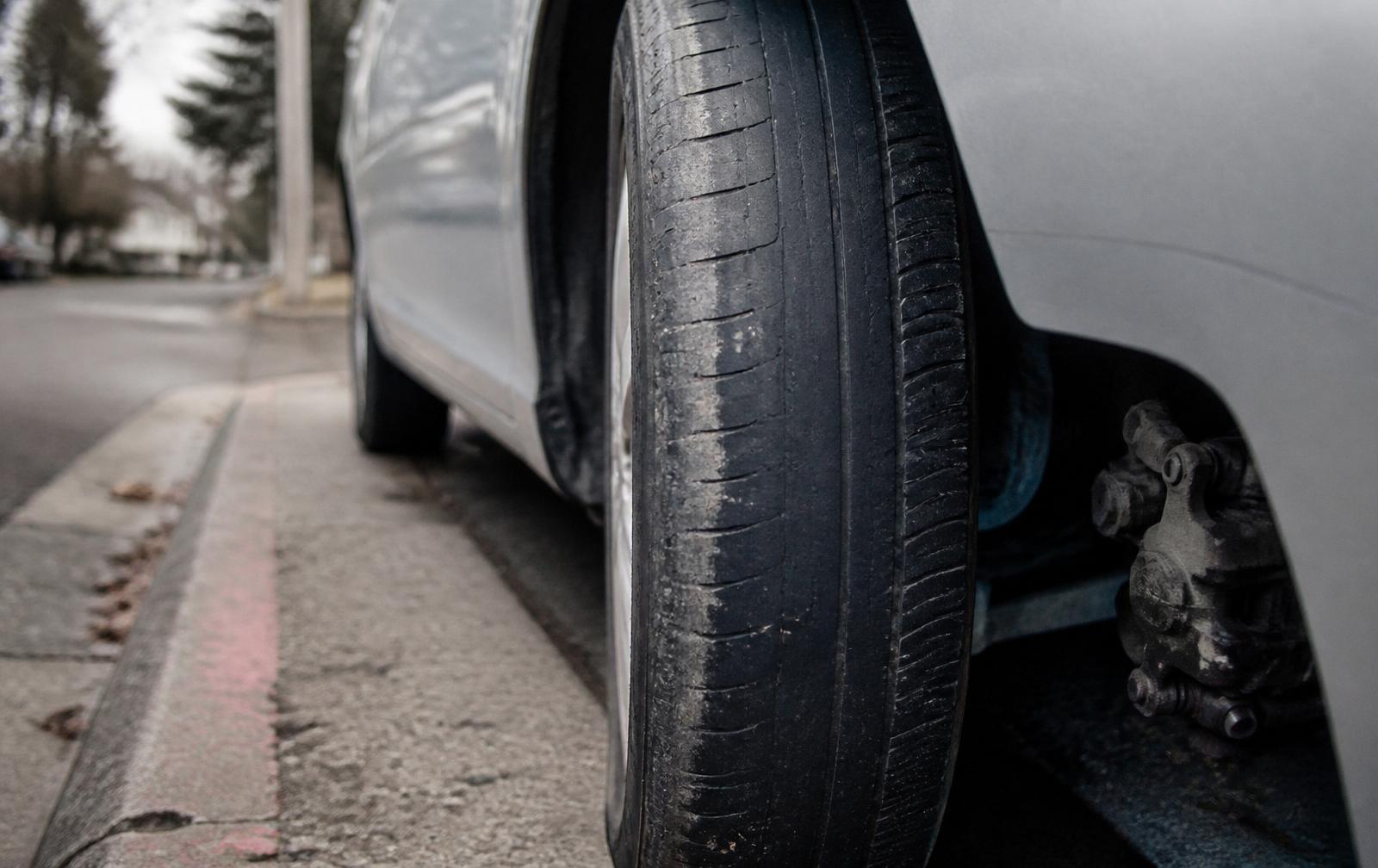
Original tyres wear predictably. A car showing 40,000 km should still have its original tyres (unless replaced under warranty). If tyres have all been replaced and the car shows low kilometres, ask why — sometimes there's an innocent answer (nail damage, previous owner running softer summer tyres) but often the answer is that the car actually has 120,000 km and needed a new set.
Original brake pads typically last 40,000–70,000 km. A car showing 30,000 km that has clearly had a brake pad and rotor replacement should raise the same question.
4. NEVDIS historical odometer readings
NSW rego inspections (pink slips) record the odometer reading at each inspection. Order a NEVDIS report (paid extra on top of PPSR, ~$4) which shows the odometer at each previous pink slip lodgement. If the reading dropped between two consecutive pink slips, the car was wound. This is the single most reliable historical check available — it's what our pre-purchase inspection includes as standard.
5. Instrument cluster physical evidence
A dashboard that has been dismantled to reach the EEPROM chip usually leaves marks: scratches around cluster mounting screws, mismatched screws, tool marks on plastic trim, cluster surround not sitting flush. Not always visible, but always worth a look.
6. Under-bonnet stickers with kilometre entries
Timing belt replacement stickers, oil change reminders, and factory service stickers often carry the km at which the work was done. Any sticker showing a higher km than the current dashboard reading = wound back. These stickers are easy for a seller to remove, so absence isn't a flag; presence with a higher km IS a flag.
7. The 'too clean' presentation on an older car
A 12-year-old car that presents like a 3-year-old car is either a genuine one-owner garaged unicorn (rare but real) or a wound-back car being polished up for private sale (common). Cross-check: does the service history match the presentation? Does the price feel right for the displayed kilometres? Is the seller unusually resistant to independent inspection? Multiple flags = walk away.
How a pre-purchase inspection catches it
We run five cross-checks on odometer accuracy on every pre-purchase inspection:
- Read the odometer against the mirrored ECU / gateway module readings (mismatches indicate tampering).
- Check interior wear pattern against the displayed kilometres.
- Inspect tyre brand, tread depth and DOT date against the km.
- Cross-reference against any service records provided (dealer or physical log book).
- Run the NEVDIS check for historical pink-slip odometer readings.
In 2025 we flagged wound odometers on roughly 3% of the private-sale cars we inspected — small but not trivial. Flat $280 across Sydney, Wollongong, Central Coast and Blue Mountains. If we flag a wound odometer, walk from the deal — you dodged an average $4,000 overpayment.
Legal implications if you buy a wound-back car
Selling a car with a wound-back odometer is a criminal offence under the Australian Consumer Law and NSW Fair Trading Act. If you buy one and can prove the seller knowingly misrepresented the kilometres:
- You may be entitled to a refund from a dealer under statutory warranty.
- Private sellers can be pursued through the NSW Civil and Administrative Tribunal (NCAT).
- The seller may face fines up to $500,000 (corporations) or lower (individuals) plus criminal exposure.
- Reporting to NSW Fair Trading is free and increasingly effective — Fair Trading actively pursues odometer fraud cases.
In practice, recovering losses is difficult and slow. The far better strategy is not buying the car in the first place — which is what the pre-purchase inspection is for.
Which cars get wound most often
- 8–15 year old sedans and hatches — the sweet spot where each 20,000 km winding adds real dollars.
- Ex-fleet cars — company cars often accumulate 50,000+ km/year, making wind-backs highly profitable.
- Popular family SUVs (RAV4, CX-5, X-Trail, Kluger) — high demand hides high-km cars.
- Utes (HiLux, Ranger, Colorado, D-Max) — tradies wind for private-sale premium.
- Luxury European (Audi, BMW, Mercedes) — high-value marques where each km carries a higher $ discount.
Frequently asked.
- Is odometer winding illegal in Australia?
- Yes — under Australian Consumer Law and state fair-trading acts. Fines up to $500,000 for corporations plus criminal exposure for individuals. Still commonly practiced on private sales.
- How can you tell if a car's odometer has been wound back?
- Cross-check interior wear against displayed kilometres, examine service history (digital dealer records especially), inspect tyre and brake wear, and run a NEVDIS check for historical odometer readings at previous pink slips.
- Can digital odometers be wound back?
- Yes — often more easily than mechanical ones. Aftermarket 'odometer correction' tools sold online for $300–$1,500 rewrite the stored value via the OBD-II port in under five minutes.
- What is a NEVDIS check?
- National Exchange of Vehicle and Driver Information System — a paid ($4) add-on to a PPSR search showing historical odometer readings recorded at previous rego inspections. Directly detects reductions between consecutive readings.
- What should I do if I suspect a car's kilometres are wound?
- Walk away. Don't try to negotiate. Report the seller to NSW Fair Trading if you have evidence. Buying a wound-back car exposes you to both the immediate overpayment and future reliability of a much higher-km vehicle than you thought.
- Does a pre-purchase inspection detect odometer fraud?
- Yes — we cross-check the odometer against mirrored ECU readings, interior wear, tyre and brake wear, and historical NEVDIS records. Flagged on about 3% of the private-sale cars we inspect. Included in the flat $280.
- Can I get a refund if I've already bought a wound-back car?
- Potentially, depending on whether the seller was a dealer (statutory warranty covers misrepresentation) or private (harder — NCAT claim). Report to NSW Fair Trading regardless — Fair Trading can investigate and prosecute.
- How much does odometer fraud typically inflate a car's price?
- $2,000–$8,000 depending on how many kilometres are wound off and the vehicle's value. Higher-value cars and higher-km wind-backs = bigger premium extracted.
- Are there tools I can use to check odometer accuracy myself?
- NEVDIS check ($4) is the best DIY tool. Beyond that, most odometer verification requires diagnostic equipment to read mirrored ECU values — that's where a pre-purchase inspection adds value.
- Do dealers wind odometers?
- Rarely — the statutory warranty exposure and licence risk make it unprofitable. Almost all winding happens in private sales, sometimes with the car re-sold to a dealer who genuinely didn't know.
- What's the penalty for selling a wound-back car in NSW?
- Fines up to $500,000 for corporations, lower for individuals, plus potential criminal charges under the Australian Consumer Law. Actual prosecutions are less frequent than the offence rate but increasing.
- Do all pre-purchase inspections check the odometer?
- Ours do — standard cross-check on all five signals (ECU mirror, interior wear, tyre/brake wear, service history, NEVDIS). Not all inspectors include NEVDIS; ask before booking.
About the author
NSW Pink Slip — Lead Inspection Team
Lead AIS-Authorised eSafety Inspector · 18+ years
Our lead inspection team is Transport for NSW-authorised under the Authorised Inspection Scheme (AIS) to issue eSafety Checks (pink slips) for light vehicles up to 4.5t. Combined 18+ years of hands-on Sydney workshop experience — starting in general repair, moving through diagnostic specialisation on European and Japanese platforms, and settling into full-time mobile inspection since 2019. Every article on this site is authored or reviewed by a currently-authorised AIS examiner. If we can't verify a claim against a Transport for NSW or Service NSW source, it doesn't ship.
- ✓Transport for NSW authorised AIS examiner
- ✓Cert IV in Automotive Mechanical Diagnosis
- ✓Cert III in Light Vehicle Mechanical Technology
- ✓Cert III in Automotive Electrical Technology
- ✓Working with Children Check (WWC) verified
Reviewed by NSW Pink Slip Review Panel — Reviews every technical article for accuracy against current Transport for NSW rules, AIS inspector guidelines and manufacturer service data.
Meet the full inspection team →