Pink Slip for Electric Vehicles NSW 2026 — Tesla, Polestar, BYD, Kia, Hyundai, MG (Complete Guide)
EVs need the same annual pink slip as any other vehicle from year 5 — but the inspection is quieter, quicker, and hits a different short-list of failure items. No emissions test, more attention on tyres and regen-affected brakes, plus HV safety checks. Here's what changes when the car in your driveway is a Tesla, Polestar, BYD, Kia EV6, Ioniq or MG4.
- Reviewed by
- NSW Pink Slip Review Panel
- Published
- 16 May 2026
- Updated
- 24 July 2026
- Read time
- 10 min
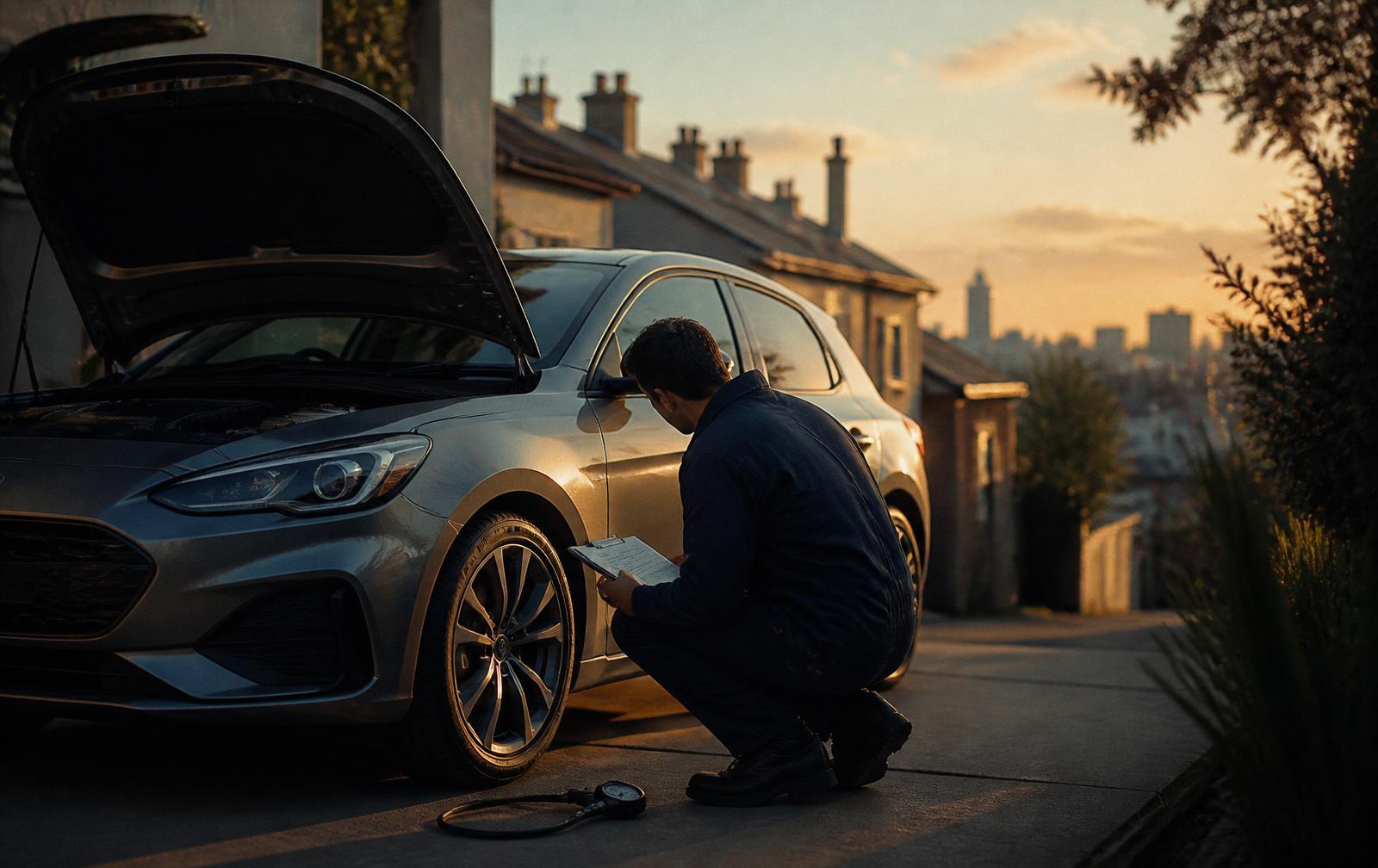
Every electric vehicle registered in NSW is subject to the same eSafety Check rules as any petrol or diesel car: no pink slip required under 5 years old, mandatory annually from year 5 onwards. The oldest Model S in NSW is well past that threshold; the wave of 2019–2021 Model 3s, Kona Electrics, Ioniq 5s and early Polestars is hitting its first mandatory inspection right now. This is what actually changes on the inspection side when the car in your driveway is electric — and what stays exactly the same.
The rule (no EV exemption)
There is no EV exemption from the NSW pink slip requirement. Age counts from the vehicle's build date (compliance plate), not from delivery. A 2020-build Tesla Model 3 delivered in early 2021 is due for its first pink slip against the 2025 renewal onwards.
What's the same as a petrol pink slip
- Tyres — same 1.5mm minimum tread across the central three-quarters, same rules on damage and load rating.
- Brakes — same minimum pad thickness and disc thickness rules.
- Lights — same low/high beam, brake, indicator, reverse, and number plate lamp checks.
- Steering and suspension — same play limits at the wheel, same rules on leaking shocks.
- Structure — same rules on rust, unrepaired collision damage, and body integrity.
- Seatbelts — same retraction and buckle checks on all seats.
- Glass and wipers — same rules on windscreen cracks in the driver's swept area.
- Registered ID — same VIN and plate cross-check with Service NSW records.
- Regulated fee — capped at $51 for a light vehicle, EV or not.
- 6-month validity from issue, same as any car.
What's different on an EV inspection
1. No emissions scan (no OBD-II codes to read)
EVs have no combustion engine, no exhaust, no catalytic converter and no emissions-related OBD-II readiness monitors. That entire step of the standard inspection is skipped. The car has an OBD-II style diagnostic port (for high-voltage system diagnostics) but the AIS inspector's role is limited to safety, not HV health. This is why an EV inspection often takes 5–10 minutes less than the same size petrol car.
2. Brake pad wear is often lower than expected
Because regenerative braking does most of the deceleration in city driving, EV brake pads wear extraordinarily slowly. A five-year-old Model 3 on original front pads still measuring 8–10mm is normal. The corresponding petrol car would have been through two sets. This shifts the failure profile: fewer pad fails, more attention to rust build-up on discs (they see less friction and rust more) and to caliper slide-pin seizure from underuse.
3. Tyre wear is faster, often uneven
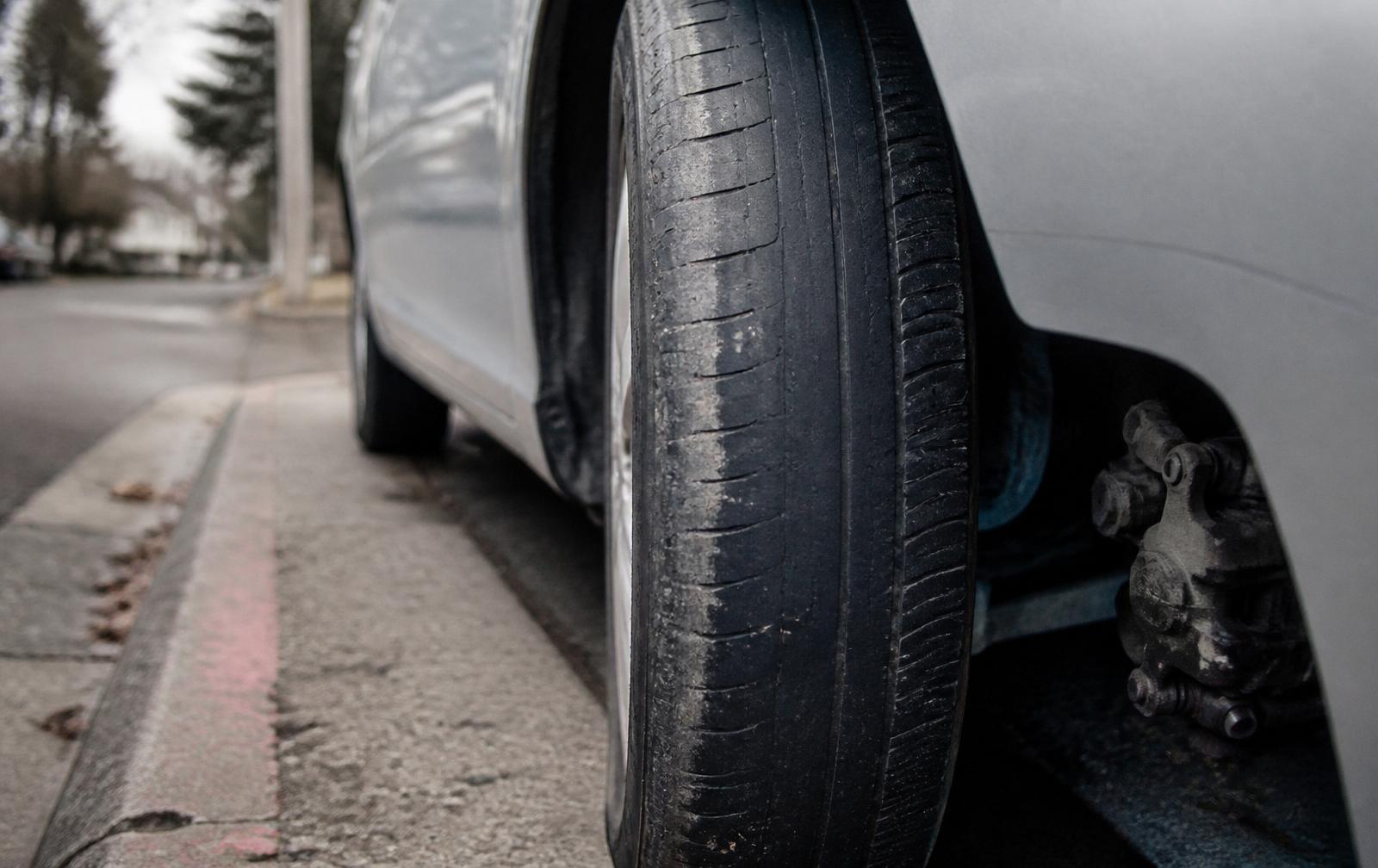
EVs are heavier than the equivalent petrol car (battery mass) and carry instant torque. Tyres wear faster — especially the rear on rear-drive Teslas and the front on nose-heavy AWD models like the EV6 GT. Uneven wear across the shoulders is common on Ioniq 5s and BYDs due to camber setup. This is by far the most common EV pink slip fail: worn or damaged tyres.
4. 12V battery is a common failure point
Every EV has a small 12V battery running the accessory electronics — locks, lights, computer boot-up. On many EVs (early Model 3s especially) this 12V battery is undersized and fails at 3–4 years. A car that won't wake up for the inspection is a straightforward fail on presence-of-power items and often has no warning symptoms other than the occasional "car unresponsive" message on the app. Worth having this replaced pre-inspection if you're on the original 12V and past 3 years.
5. HV safety inspection (visual only)
The inspector doesn't test the high-voltage system electrically — that's a manufacturer specialist job. But we do check visually: no damage to the underbody battery casing, no signs of arcing or burnt cable at the charge port, HV cables intact and clipped. This is a safety-cursory check, not a diagnostic one.
6. Software-driven items (specific to Tesla)
Some Teslas display fault codes on the driver screen that don't affect safety-related items — for example, cabin overheat protection warnings or Autopilot camera calibration prompts. These don't fail a pink slip. Only genuine safety-related warnings (ABS, ESC, airbag, brake, steering) fail if permanently illuminated.
Model-specific things we watch for
- Tesla Model 3 & Y — original 12V battery on early builds, rear tyre wear, occasional touchscreen not booting (blocks review of dash warnings).
- Tesla Model S & X — front upper control arm bushings on early cars, MCU boot health.
- Polestar 2 — front lower control arm wear on cars with 60,000+ km, brake disc rust from lack of use.
- BYD Atto 3 — tyre wear on softer OE compound, wheel alignment often out from factory.
- Kia EV6 & Hyundai Ioniq 5 — regen brake caliper slide-pin seizure, HV cover clip integrity underneath.
- MG4 — battery cover mounting bolts (early production issue), rear tyre wear, headlight beam pattern.
- Nissan Leaf (older) — 12V battery, high-voltage battery cover corrosion in coastal Sydney suburbs, brake caliper seizure.
Prep the night before
- Check tyre tread with a depth gauge — most EVs wear the rear (RWD) or front (AWD) tyres faster. 1.5mm is the pass threshold.
- Make sure the car will wake up — a dying 12V battery is the single most common cause of an EV that "won't start" for a pink slip.
- Look at the charge port visually — no burn marks, no damaged pins, port door closes flush.
- Clear any red warning icons on the driver display. Amber warnings usually don't fail, red ones need investigation.
- Have the car charged to at least 30% so it doesn't sleep aggressively during the inspection.
- Have registration papers to hand, plus the vehicle's key card or app permissions if you're not physically present during the inspection.
Does mobile inspection work for EVs?
Yes — arguably better than for petrol cars. EVs don't need to be warmed up, don't need to sit outside a workshop for engine-emissions testing, and we don't need a hoist because there's no exhaust to check underneath. A driveway or garage inspection is faster and often more thorough than a workshop appointment.
We frequently do EV pink slips at office car parks in the CBD and North Sydney too — the car doesn't need to be moved, we just need access.
EV-specific misconceptions
- "My Tesla doesn't need a pink slip because it's electric." Wrong — same age rule applies, no EV exemption.
- "You need a Tesla-trained technician for the inspection." Wrong — an AIS inspector does the safety inspection. Manufacturer HV diagnostics are a separate specialist job.
- "There's no emissions test so my EV pink slip should be cheaper." The fee is the same regulated cap — the emissions test is only one item on a much longer schedule.
- "EVs don't need brake fluid checks." They do — brake fluid still hydraulic, still degrades, still checked.
- "Charging port issues will fail a pink slip." Only if there's visible burn damage or exposed conductors. Cosmetic wear doesn't fail.
Timing tips for EV owners
- Book 3–4 weeks before rego expiry — same as any car. The most common EV fail (tyres) is fixable in a week, which needs breathing room.
- If you know the 12V battery is original and 3+ years old, replace it before the inspection — much cheaper than rebooking.
- If the car has been sitting for 2+ weeks unused (holidays, second car), plug it in for a day or two before the inspection to make sure the 12V is charged.
- Free re-inspection window is the same 14 days.
Frequently asked.
- Do electric vehicles need a pink slip in NSW?
- Yes — same rule as any car: annually from age 5. There is no EV exemption from the eSafety Check requirement.
- How much is a pink slip for an EV in NSW?
- Same regulated cap as any light vehicle — $51 at a workshop, or our flat $179 mobile. No EV premium and no emissions-related discount.
- Do I need a Tesla-authorised technician for a Tesla pink slip?
- No — any NSW AIS inspector can do a Tesla pink slip. The inspection is a general safety check, not a manufacturer diagnostic. HV system health is a separate specialist job with the manufacturer.
- Is there an emissions test on an EV pink slip?
- No — EVs have no exhaust or emissions-related monitors, so the emissions step of the inspection is skipped. This often makes the whole appointment 5–10 minutes shorter.
- Why is my EV's 12V battery relevant to a pink slip?
- Because if the 12V is dead the car won't wake up — the inspector can't test lights, indicators, wipers or dash warnings. On early Model 3s especially, the 12V often fails at 3–4 years. Replace pre-inspection if it's original and old.
- Do regenerative brake pads count differently on a pink slip?
- The measurement rule is the same (minimum pad thickness) but EV pads usually wear much slower than petrol equivalents because of regen. What we watch for instead is disc rust build-up and caliper slide-pin seizure from underuse.
- Are EV tyres more likely to fail a pink slip?
- Yes — heavier vehicles and instant torque wear tyres faster, especially on the driven axle. Tyre-related fails are the most common EV pink slip fail we see.
- Does my Tesla screen touchscreen have to be working for the pink slip?
- Yes — the inspector needs to review dash warnings and confirm no active safety-related fault codes. A dead or unbootable screen blocks the check.
- Can a mobile inspector work on my EV?
- Absolutely — often more convenient than a workshop for EVs. No engine warm-up, no exhaust check, no hoist needed. Driveway, garage or office car park all work.
- Will an Autopilot or advanced-driver-assistance warning fail my pink slip?
- Only if it's a genuine safety warning (ABS, ESC, airbag, brake, steering) permanently illuminated. Camera calibration prompts or cabin overheat notices don't fail.
- Do I need to disclose battery capacity or state-of-health for the pink slip?
- No — the pink slip is a safety inspection, not a HV battery report. Battery capacity/SOH is a separate diagnostic run by the manufacturer or an EV specialist if you want that data.
About the author
NSW Pink Slip — Lead Inspection Team
Lead AIS-Authorised eSafety Inspector · 18+ years
Our lead inspection team is Transport for NSW-authorised under the Authorised Inspection Scheme (AIS) to issue eSafety Checks (pink slips) for light vehicles up to 4.5t. Combined 18+ years of hands-on Sydney workshop experience — starting in general repair, moving through diagnostic specialisation on European and Japanese platforms, and settling into full-time mobile inspection since 2019. Every article on this site is authored or reviewed by a currently-authorised AIS examiner. If we can't verify a claim against a Transport for NSW or Service NSW source, it doesn't ship.
- ✓Transport for NSW authorised AIS examiner
- ✓Cert IV in Automotive Mechanical Diagnosis
- ✓Cert III in Light Vehicle Mechanical Technology
- ✓Cert III in Automotive Electrical Technology
- ✓Working with Children Check (WWC) verified
Reviewed by NSW Pink Slip Review Panel — Reviews every technical article for accuracy against current Transport for NSW rules, AIS inspector guidelines and manufacturer service data.
Meet the full inspection team →Related from the workshop.
What Is a Pink Slip in NSW? The 2026 eSafety Check Explained (Plain English)
The 6 Most Common Pink Slip Fails in Sydney (and How to Fix Each Under $50)