The 6 Most Common Pink Slip Fails in Sydney (and How to Fix Each Under $50)
After thousands of inspections across Sydney the same six items cause the overwhelming majority of first-pass fails — and five of them cost less than $50 in parts to sort out. Here's each fail, the exact Transport for NSW pass/fail line, the driveway self-check that catches it, and a realistic fix cost.
- Reviewed by
- NSW Pink Slip Review Panel
- Published
- 5 February 2026
- Updated
- 24 July 2026
- Read time
- 11 min
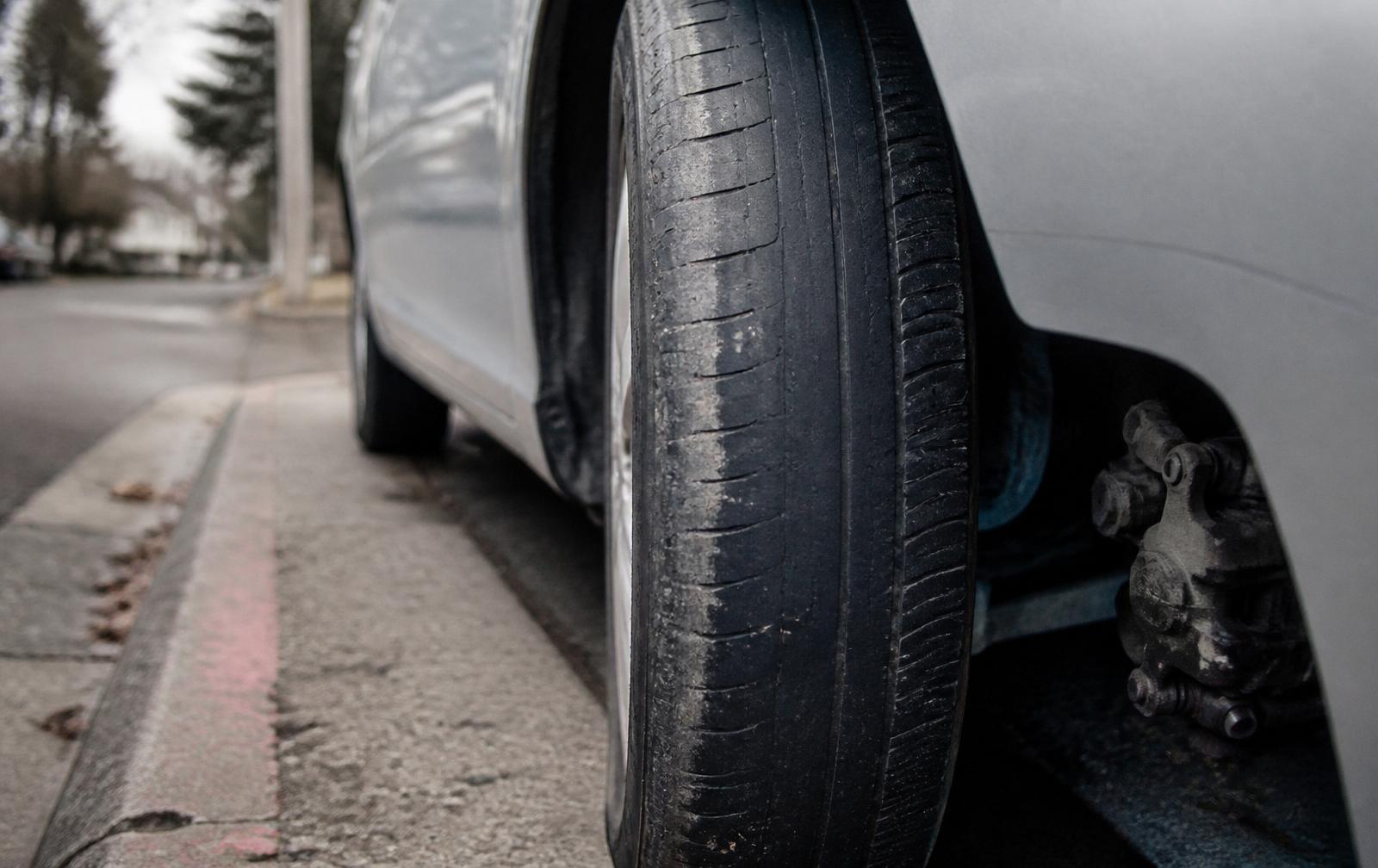
Pink slip fails cluster. Six items — tyres, exterior globes, wipers, windscreen chips, handbrake travel, and dead shock absorbers — cause roughly 80% of the first-pass fails we see across Sydney in an average month. Five of them are cheap fixes that any driver can do at home or at a $95 tyre bay on the way. The sixth (worn shocks) needs a workshop but is at least predictable. This is the shortlist to run through in your driveway the night before we arrive.
1. Tyres below 1.5mm — the single most common fail
The regulated minimum is 1.5mm across the central three-quarters of the tyre width, measured at any point around the circumference. Below that, the inspector has no discretion. In Sydney, front tyres on front-wheel-drive hatches and small sedans (Corolla, Yaris, Mazda 3, Cerato) are the usual candidates — front-driven cars scrub the front tyres about 2× faster than the rear.
The trap: tyres wear unevenly. The centre of the tread might still measure 3mm but the inner shoulder is at 1.2mm. An inspector measures at multiple points and takes the worst — you should too.
Self-check: put a 20-cent coin (platypus edge down) into the deepest tread groove. If the platypus's bill is fully hidden, you have at least 3mm. If any of the bill is showing, measure with a $6 depth gauge from Supercheap. Check the inner and outer edges as well as the centre.
Fix: replacement tyres from about $95 fitted per corner at independent Sydney fitters (a bit more for larger 17"+ sizes, less on 14–15" small-car sizes). If only one front is under, replace the matched pair — mismatched fronts change handling significantly.
2. Blown exterior globes — brake, indicator, reverse, number plate
Every exterior lamp fitted to the vehicle must work on the correct switch. One blown globe is one automatic fail. The two most-missed by drivers: the high-mount stop lamp (the third brake light across the back window on hatches, or the pod on the boot lid on sedans) and the number plate lamp — both are behind you when you're checking the pedal.
Self-check: get a helper into the driver's seat while you walk around. Ask them to run through indicators (both sides), hazards, headlights low and high, brake pedal (watch all three brake lamps), then engage reverse gear (watch the reverse lights). Finally, headlights on and walk to the back — the number plate should be lit.
Fix: replacement globes from $8 each at Supercheap or Autobarn; 5 minutes for most bayonet fittings, 15 minutes if the fitting is behind a headlight housing. LED replacement bulbs are legal provided they meet ADR — the packaging will say.
3. Wipers that streak or judder
The pass/fail test is functional: on a wet screen the wipers must clear cleanly on every pass through the driver's swept area, without streaking or juddering. Sydney's UV kills rubber wiper blades in 12–18 months regardless of how much you use them, and drivers don't notice the slow decline. The inspector notices immediately.
Self-check: wet the screen fully with the washer jets and run one wipe. If there's a streak anywhere in your normal line of sight, or the blade juddered across the sweep, they're gone.
Fix: wiper blade pairs $25–$45 at any auto parts store, 5 minutes to fit. Buy the same brand as the original where possible — the arm-to-blade clip mechanism varies enough between brands that a $12 generic sometimes doesn't seat cleanly.
4. Windscreen chips and cracks
Two lines to know. Any crack more than 30mm in the passenger's swept area fails. Any crack more than 15mm in the driver's swept area fails. Any spreading star or edge-to-edge crack anywhere on the screen fails regardless of size. Bullseye chips or star chips smaller than 5c coin, outside the driver's direct sightline, are tolerated.
Self-check: sit in the driver's seat, look straight ahead as though you're driving. Anything you notice in that eyeline is worth measuring.
Fix: chip repair (resin injected into a stone chip) $60–$120 at any Novus, O'Brien or independent windscreen shop, and most comprehensive insurance policies cover it excess-free. Full replacement runs $350–$1,200 depending on features (rain sensors, driver-assist cameras behind the mirror, heated wiper park zone). Do the chip repair the moment a chip appears — Sydney's temperature swings turn a repairable chip into an unrepairable spreading crack in a single hot day.
5. Handbrake that won't hold on a hill
The functional test: pull the handbrake firmly with the car in neutral on a 12% grade. The car must hold without creeping. A lever that rachets past the click-limit without arresting the car, or a pedal that goes to the floor, fails.
Self-check: park on the steepest street you know (or a driveway slope), apply the handbrake firmly, take it out of gear, and let go of the footbrake. If the car creeps or the handbrake gets less bite each time you use it, it's a fail waiting to happen.
Fix: on cable-operated systems (most cars), it's usually just a cable adjustment — $40–$80 at any workshop, 20 minutes. If the rear pads or shoes are worn out (the handbrake operates against them), full rear pad or shoe replacement runs $200–$350. On electronic parking brake systems (increasingly common on post-2015 cars) the motors themselves can fail — that's a bigger job, $400–$700.
6. Dead shock absorbers
The one item on this list that's not a five-minute driveway fix. A shock absorber that has failed will visibly leak oil down the shaft, or show its failure in a bounce test — the car will bounce two or three times over a bump instead of settling in one. Failed shocks fail a pink slip because they compromise braking distance and cornering stability, not because of the leak itself.
Self-check: look under the front of each side of the car for wetness on the shock body. Then push down hard on each corner and release — should bounce once and settle. Two or three bounces means the damping has gone.
Fix: front shocks $250–$450 per pair fitted at most independent workshops. Always replace in pairs — a fresh shock on one side and a tired one on the other creates uneven handling that's arguably worse than two tired shocks.
Honourable mentions — the near-miss fails
- Seatbelt that won't retract — often the webbing is reversed inside the retractor. A workshop can often free it for a small fee; a full belt assembly is $180 fitted.
- Small oil seep from a valve cover gasket — usually just an advisory, but if it's dripping actively onto the exhaust manifold it's a fail. Gasket replacement $150–$300.
- Exhaust leak forward of the muffler — a rusted flange or hole. Patch weld $80–$150 at any exhaust shop.
- Cracked side mirror or one that won't stay in position — replacement mirror glass $40, full housing $150–$300.
- Headlights that have oxidised so heavily the beam is dim — lens restoration kit $25 and 30 minutes of buffing usually saves them; if not, replacement housings.
The under-$100 clean-sweep
If you had one hour and $100 the day before a pink slip, this is where every dollar should go, in priority order:
- A pair of wiper blades: $30.
- Two brake globes and one indicator globe as spares: $24.
- A pack of 20-cent coins and 10 minutes measuring tread on every tyre.
- A windscreen chip repair for anything larger than a 5c piece: $60–$120 (often insurance-covered).
- A five-minute walk-around with a helper on the driver's seat, testing every light function.
Total real spend: $50–$180 depending on whether you actually need the chip repair. Result: five of the six most common pink slip fails eliminated before the inspector arrives.
What we do if the car fails anyway
You get an itemised report on the day — the exact fail items, the reason each failed against the AIS criteria, and a note of what a workshop should look for. You have 14 days to have the items fixed by whichever mechanic you prefer and we come back for a free re-inspection. No fresh call-out fee, no admin charge. Only the passing result is ever lodged.
Frequently asked.
- What's the most common reason a car fails a pink slip in NSW?
- Tyres below the 1.5mm minimum tread depth, followed by blown brake or indicator globes and worn wiper blades. Between them these three items account for around half of first-pass fails.
- Can I still drive if my car fails a pink slip?
- Yes, provided your rego hasn't expired yet — the fail isn't lodged against your rego, so you're legally free to drive to a workshop for the repairs. If your rego has already lapsed you'll need an unregistered vehicle permit to move the car.
- How much do most pink slip fixes cost?
- Under $50 for globes and wipers, $95+ per tyre, $60–$120 for a windscreen chip repair (often insurance-covered), $40–$80 for a handbrake cable adjustment. The expensive fixes are dead shocks ($250–$450 fitted) and perforating rust.
- Will a small stone chip fail my windscreen?
- A chip smaller than a 5c coin outside the driver's direct sightline is usually tolerated. Any crack more than 15mm in the driver's swept area fails, as does any spreading crack anywhere on the screen.
- Are brake pads a common fail?
- Yes — pads under 3mm remaining friction material fail. It's not in the top-6 for us only because most drivers who track pad life get them replaced during a normal service, so the pink slip usually catches them within a warning-noise window rather than a fail window.
- Does the horn need to work for a pink slip?
- Yes — a functional horn is on the AIS checklist. It's a rare fail but does happen when the steering wheel button contact has corroded.
- Can worn wiper blades really fail my pink slip?
- Yes — the pass criteria is functional (clean sweep, no streaking in the driver's area), not just presence. Sydney's UV kills wiper rubber in 12–18 months.
- Will a puncture repair be an issue?
- A properly performed puncture repair on a tyre with adequate tread is fine. A plug repair on a sidewall or shoulder is a fail — sidewall damage cannot be safely repaired.
- Are aftermarket LED headlight globes legal for a pink slip?
- LED replacement globes are legal provided they meet the ADR (Australian Design Rules) and don't dazzle oncoming traffic. The packaging will state ADR compliance. Un-compliant "eBay LED" globes fail.
- Does the pink slip check the check engine light?
- On vehicles registered from January 2020 the inspector plugs in an OBD-II scanner and checks for stored emissions-related fault codes. On older vehicles the check-engine light itself isn't part of the check.
- Do I need to fix all fail items to pass?
- Yes — every item listed as a fail on the report must be rectified before the re-inspection. Advisories (items noted but not failed) don't need to be fixed for the pass to be lodged.
- Can a workshop fix and re-inspect the same day?
- Yes — many workshops (including some we work with) can turn simple fails around the same day, then we return for the free re-inspection once repairs are complete. Complex fails (rust repair, shock replacement) usually take longer.
About the author
NSW Pink Slip — Lead Inspection Team
Lead AIS-Authorised eSafety Inspector · 18+ years
Our lead inspection team is Transport for NSW-authorised under the Authorised Inspection Scheme (AIS) to issue eSafety Checks (pink slips) for light vehicles up to 4.5t. Combined 18+ years of hands-on Sydney workshop experience — starting in general repair, moving through diagnostic specialisation on European and Japanese platforms, and settling into full-time mobile inspection since 2019. Every article on this site is authored or reviewed by a currently-authorised AIS examiner. If we can't verify a claim against a Transport for NSW or Service NSW source, it doesn't ship.
- ✓Transport for NSW authorised AIS examiner
- ✓Cert IV in Automotive Mechanical Diagnosis
- ✓Cert III in Light Vehicle Mechanical Technology
- ✓Cert III in Automotive Electrical Technology
- ✓Working with Children Check (WWC) verified
Reviewed by NSW Pink Slip Review Panel — Reviews every technical article for accuracy against current Transport for NSW rules, AIS inspector guidelines and manufacturer service data.
Meet the full inspection team →Related from the workshop.
What Fails a Pink Slip in NSW? The 12 Items That Cost Most Drivers a Re-Inspection (2026)
NSW Pink Slip Checklist 2026 — The 25-Point Pre-Inspection List an AIS Inspector Actually Uses