NSW Pink Slip Checklist 2026 — The 25-Point Pre-Inspection List an AIS Inspector Actually Uses
Ninety percent of pink slip fails cost less to fix than the inspection itself — a $8 globe, a $25 wiper, a $40 handbrake cable adjustment. This is the full 25-point checklist an AIS inspector works through, in the order they run it, with the exact pass/fail line for each item so you can walk into your inspection knowing the outcome.
- Reviewed by
- NSW Pink Slip Review Panel
- Published
- 2 May 2026
- Updated
- 24 July 2026
- Read time
- 12 min
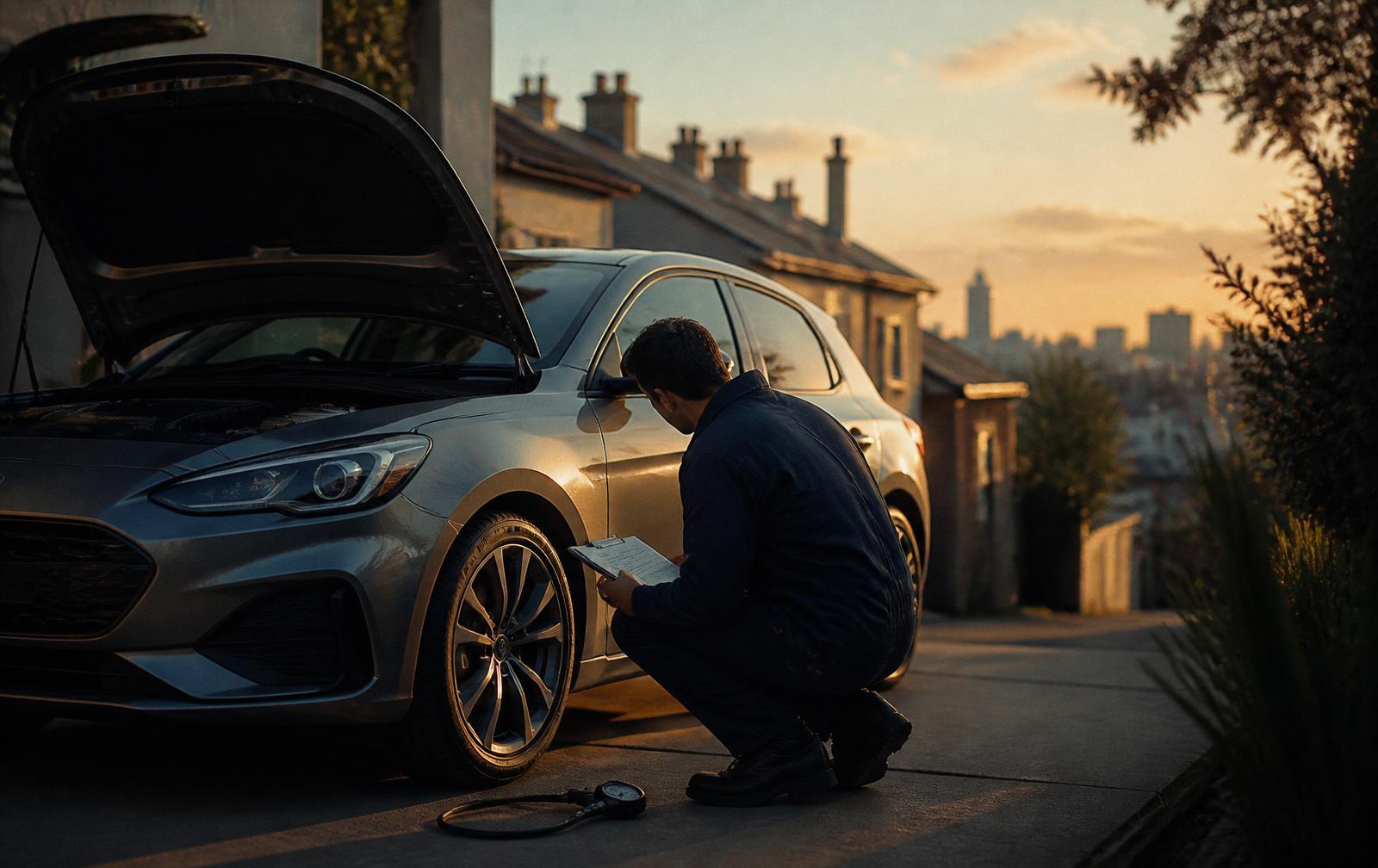
The NSW eSafety Check (pink slip) works from a fixed 25-point criteria set published by Transport for NSW. Every Authorised Inspection Station (AIS) — mobile or workshop — walks through the same list in roughly the same order. The good news for drivers: if the checklist is fixed, the pre-check is fixed too. Spend 20 minutes with a torch, a tape measure and a helper the night before, and you'll catch two-thirds of the items that fail cars on the first attempt. Here's exactly what an inspector checks, in the order they check it, with the pass/fail line for each.
How an inspector actually runs the check
A typical mobile inspection follows a repeatable sequence: identity documents first (VIN plate, engine number, rego papers), then a 360° walk-around of the exterior (lights, glass, tyres, plates), then interior (seatbelts, wipers, horn, dashboard warnings), then the wheels come off for brakes and suspension, then a bonnet inspection for structural and emissions items, then on modern cars an OBD-II scan. Under 30 minutes for a normal sedan or hatchback with no fail items.
Section A — Identity (2 items)
- VIN and engine number match the rego papers. The 17-character VIN is stamped on the compliance plate and etched on the windscreen — both must be legible and match Service NSW records. Self-check: photograph the compliance plate and compare against your rego renewal notice.
- Number plates present, legible, unobstructed. Both front and rear, mounted to the vehicle (not sitting on the dashboard), not blocked by tow bar tongues, bike racks or bull bar brackets. Self-check: stand 5 metres back — if you can read every character, you're fine.
Section B — Tyres and wheels (3 items)
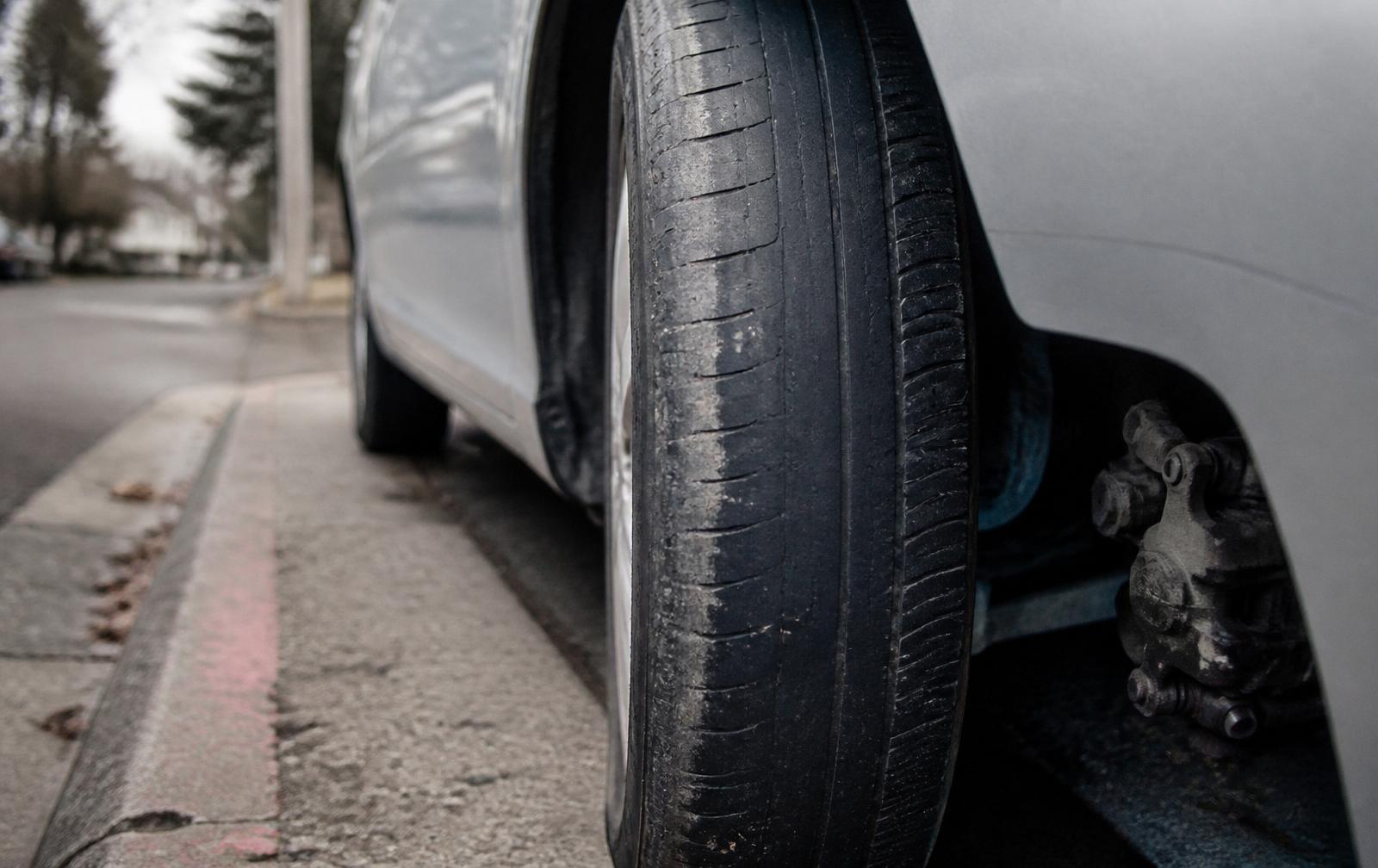
- Tread depth at least 1.5mm across the central three-quarters of the tyre, measured at any point around the circumference. Self-check: a 20-cent coin's platypus bill should be hidden when inserted into the groove — if the bill sits above the tread, you're likely under 3mm and worth measuring properly.
- Sidewall condition — no bulges, cuts exposing cord, or evidence of structural damage. Self-check: turn each front wheel to full lock and inspect the inner shoulder (the side you never usually see); any egg-shape is a fail.
- Wheels — no cracks in the alloy or steel rim, wheel nuts all present and correctly torqued, correct load rating and offset for the vehicle. Aftermarket wheels are fine provided they meet the manufacturer's load spec and don't foul suspension.
Section C — Lights and reflectors (5 items)
- Headlights — both low and high beam work, aim correctly (low beam hotspot below the driver's eye line at 5m), and aren't so oxidised that beam output is significantly reduced.
- Tail lights, brake lights and the high-mount stop lamp all work. Ask a helper to press the brake pedal while you walk to the back — three brake lamps must illuminate on almost every car built after 1994.
- Indicators — front, side (if fitted) and rear each side flash at the correct rate; hazard lights operate all four corners simultaneously.
- Reverse lights work when the vehicle is in reverse gear (or with an automatic, when the selector is in R).
- Number plate lamp illuminates the rear plate; front and rear reflectors present and undamaged.
Section D — Glass and vision (3 items)
- Windscreen — no cracks longer than 30mm in the passenger's swept area, no cracks longer than 15mm in the driver's swept area, no spreading star or edge-to-edge crack anywhere. Self-check: sit in the driver's seat and look straight ahead; any chip larger than a 5-cent coin in your normal eyeline is a red flag.
- Wipers clear cleanly across the whole driver's sweep with no streaking or juddering. Self-check: wet the screen fully with the washers and run one wipe — any streak in the driver's line of sight fails.
- Rear window and side glass — no cracks obscuring vision, factory tint retained (aftermarket tint is fine within legal limits: 35% VLT on front side windows, no limit on rear).
Section E — Interior safety (4 items)
- Seatbelts — every belt in the car retracts fully when released, locks under sudden pull, latches cleanly into the buckle, and shows no cuts or fraying to the webbing. Self-check: pull every belt (including rear centre) out fully, release, then jerk sharply — should lock.
- Horn operates from the steering wheel button.
- Steering wheel free from excessive play (roughly 30mm at the rim before the front wheels move).
- Speedometer functional and reads within tolerance (verified against GPS on the road test if there's doubt).
Section F — Brakes (3 items)
- Pad and disc thickness — at least one front wheel comes off. Friction material must be at least 3mm remaining; disc thickness must exceed the minimum stamped on the disc face.
- Functional pedal test — pedal holds pressure at half-stroke without sinking; no fluid loss at the master cylinder or wheel cylinders.
- Handbrake holds the vehicle on a 12% grade without creeping, engages within the design travel of the lever or pedal.
Section G — Steering and suspension (2 items)
- Steering — no excessive play in the wheel, tie rod ends, ball joints or rack; boots intact.
- Suspension — shock absorbers not leaking oil down the shaft, springs unbroken, control arm bushes intact. Self-check: push down hard on each corner; should bounce once and settle, not two or three times.
Section H — Structure and body (2 items)
- No perforating rust in load-bearing panels — sills, floor pan, chassis rails, suspension mounts, subframe. Cosmetic surface rust anywhere on panels doesn't fail; only rust that has actually eaten through steel does.
- No unrepaired collision damage that affects structural integrity or the operation of doors, boot, bonnet or lighting.
Section I — Under bonnet (2 items)
- No active fuel or brake fluid leak. A light seep is usually an advisory; an active drip that leaves fluid on the ground is a fail.
- Engine and gearbox mounts intact, exhaust manifold sound with no leaks forward of the muffler, no dangling components.
Section J — Emissions (vehicles registered from Jan 2020)
An OBD-II scanner is plugged into the diagnostic port under the dash. The check looks for stored emissions-related fault codes (catalyst efficiency, oxygen sensor, evap system) and whether the readiness monitors have completed since any recent code clear. A code cleared with the scanner just before the inspection will fail — the readiness monitors haven't reset and the inspector will see that.
The 20-minute pre-inspection self-check
You don't need to run all 25 checks yourself — half of them require tools you don't have. But this condensed six-step sequence catches roughly two-thirds of the fails we see on the day:
- Walk the exterior lights with a helper on the driver's seat — every corner, every function. Buy any needed globes ($8 each) at Supercheap or Autobarn on the way home. 3 minutes.
- Tread and sidewall check on all four tyres. If you're at the limit, buy one now — a $95 tyre is cheaper than a re-inspection call-out and the peace of mind is real. 3 minutes.
- Handbrake test on the steepest hill near your house. Should hold without creeping. If not, the cable is usually the fix. 2 minutes.
- Wet the windscreen and run the wipers on one pass. Streak in your eye line = new blades ($25 pair, 5 minutes to fit). 1 minute.
- Every seatbelt out to full extension, released, jerked. Every buckle latched and released. 3 minutes.
- Bounce test each corner of the car — one bounce and settle, never two or three. 2 minutes.
Six items, twenty minutes, most of the common fails eliminated for under $100 in parts.
What the checklist doesn't cover (and why drivers get confused)
- A due service or oil change. Not on the AIS checklist.
- Timing belt intervals. Not on the checklist.
- Cosmetic dents, scratches, faded paint, or worn interior trim. Not on the checklist.
- A slow oil seep that doesn't drip actively. Advisory, not fail.
- A worn CV boot that hasn't split yet. Advisory.
- Aftermarket wheels of the correct load rating and offset. Not a fail.
- Aftermarket exhaust that meets noise limits and retains a legal catalytic converter. Not a fail.
- Legal-limit window tint. Not a fail.
A good inspector will still call these out on the report as advisories so you know what's coming — they just can't hold up your rego.
What to have ready on the day
- Registration papers or a photo of the current rego renewal notice.
- Photo ID for the registered operator.
- A cleared driveway with room to open all four doors and the bonnet.
- Keys, and if your car has a locking wheel nut, the key adapter for it (many modern alloys).
- Service NSW login handy if you want to complete the rego renewal the same afternoon.
Frequently asked.
- What items are on the NSW pink slip checklist?
- The AIS checklist covers roughly 25 items across 10 sections: vehicle identity, tyres and wheels, lights and reflectors, glass and vision, interior safety (seatbelts, horn, steering play), brakes, suspension, structure and rust, under-bonnet items, and (for vehicles registered from Jan 2020) an OBD-II emissions scan.
- How can I check my car will pass a pink slip before booking?
- Run the six-step self-check: exterior lights, tyre tread and sidewalls, handbrake on a hill, wipers, seatbelts, and a bounce test on each corner. That catches most of the fails we see on the day.
- Does the pink slip inspector remove the wheels?
- Yes — at least one front wheel comes off to measure brake pad thickness and inspect the disc, ball joints and hub. On some vehicles a rear wheel is also removed if there's a concern.
- Does the pink slip include an OBD-II scan?
- On vehicles registered from 1 January 2020, yes — an OBD-II scanner is plugged into the diagnostic port and checks for stored emissions-related fault codes and readiness-monitor completion. On older vehicles the check-engine light itself isn't tested.
- Is legal-limit window tint OK for a pink slip?
- Yes — 35% VLT or lighter on front side windows and any tint on rear windows is fine. Only tint darker than the legal limit fails.
- Are aftermarket wheels a pink slip fail?
- Not automatically. Aftermarket wheels are fine provided they meet the correct load rating and offset for the vehicle and don't foul suspension components.
- Will a service light on the dashboard fail my pink slip?
- No — a service or maintenance indicator light isn't on the AIS checklist. Only emissions-related fault codes (on post-2020 vehicles) affect the check.
- Does the inspector road-test the car?
- Not usually. A brief functional test in the driveway (brake pedal, handbrake on a slope) is standard, but a full road test is only done if there's a specific concern the inspector wants to verify (speedometer accuracy, brake pull).
- How long does the pink slip inspection actually take?
- 20–30 minutes on a standard car with no fail items. Add 5–10 minutes for electronic lodgement and payment.
- What's the cheapest thing I can do to improve my chances?
- Replace any blown globes ($8 each), fit fresh wiper blades ($25 pair), and check tyre pressures. Between them those three fixes eliminate the three most common fails we see, for under $50 total.
- Do I need to clean the car before the inspection?
- Not required, but a clean engine bay makes leaks easier to spot honestly (a dirty bay hides seeps that a rain-shower would then reveal). A vacuum around the seatbelt tracks helps if the rear centre belt has been jammed under a child seat.
- Is the pink slip checklist different for utes and 4WDs?
- Same base checklist, but with attention to load-carrying items — tow bars, load restraints, additional lighting. Bull bars and roof racks need to be securely mounted and not obscure plates or lights.
About the author
NSW Pink Slip — Lead Inspection Team
Lead AIS-Authorised eSafety Inspector · 18+ years
Our lead inspection team is Transport for NSW-authorised under the Authorised Inspection Scheme (AIS) to issue eSafety Checks (pink slips) for light vehicles up to 4.5t. Combined 18+ years of hands-on Sydney workshop experience — starting in general repair, moving through diagnostic specialisation on European and Japanese platforms, and settling into full-time mobile inspection since 2019. Every article on this site is authored or reviewed by a currently-authorised AIS examiner. If we can't verify a claim against a Transport for NSW or Service NSW source, it doesn't ship.
- ✓Transport for NSW authorised AIS examiner
- ✓Cert IV in Automotive Mechanical Diagnosis
- ✓Cert III in Light Vehicle Mechanical Technology
- ✓Cert III in Automotive Electrical Technology
- ✓Working with Children Check (WWC) verified
Reviewed by NSW Pink Slip Review Panel — Reviews every technical article for accuracy against current Transport for NSW rules, AIS inspector guidelines and manufacturer service data.
Meet the full inspection team →Related from the workshop.
What Fails a Pink Slip in NSW? The 12 Items That Cost Most Drivers a Re-Inspection (2026)
The 6 Most Common Pink Slip Fails in Sydney (and How to Fix Each Under $50)