What Fails a Pink Slip in NSW? The 12 Items That Cost Most Drivers a Re-Inspection (2026)
Roughly one in six pink slips we do fails on the first pass — and 90% of those fails come from the same 12 items. Here's the full working list, why each fails under the Transport for NSW checklist, how to check it in your own driveway before the inspection, and what a realistic fix costs.
- Reviewed by
- NSW Pink Slip Review Panel
- Published
- 4 February 2026
- Updated
- 24 July 2026
- Read time
- 13 min
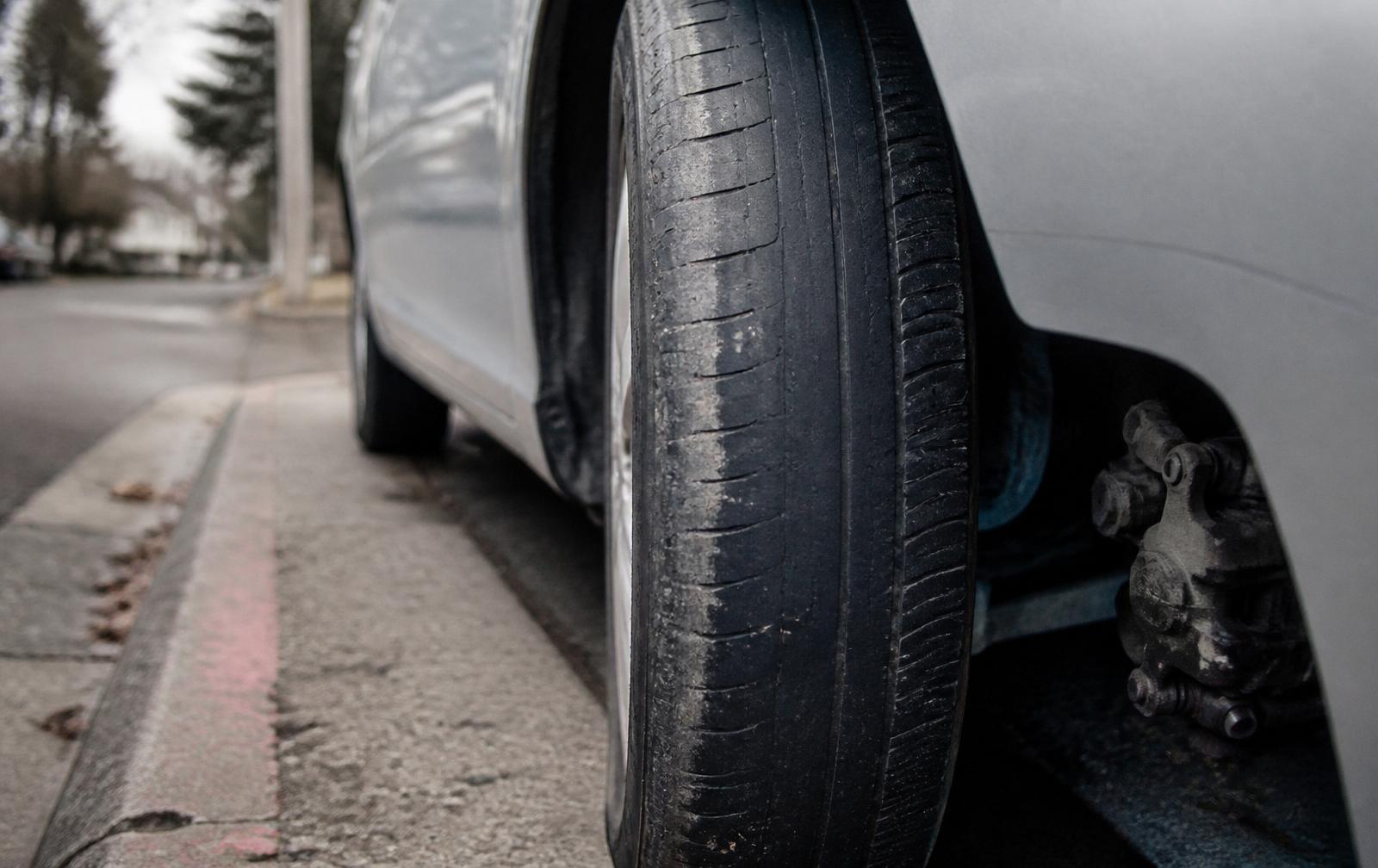
Pink slip fails aren't random. In an average month across our inspector team the same twelve items cause the overwhelming majority of first-pass fails, and none of them are engine-out heart-transplant repairs. They're maintenance items that quietly slid past the driver — a tyre that dropped below 1.5mm over the winter, a stop light that blew a week ago and never got noticed, a wiper that streaks in one corner of the windscreen. This guide walks each of them with the exact Transport for NSW pass/fail line, a driveway self-check you can do in ten minutes, and a realistic fix cost so you can decide what to sort before we arrive.
1. Tyres under 1.5mm tread
The regulated minimum is 1.5mm across the central three-quarters of the tyre's width, measured at any point around the circumference. Below that, an inspector must fail the vehicle — there's no discretion. In Sydney the front tyres on front-wheel-drive cars are usually the first to go, especially the outer edges after a summer of hot bitumen and roundabouts.
Driveway check: run your fingernail across the tread grooves — if you can barely feel a step, you're at or under. Better: put a 20-cent coin (the platypus edge) into a groove; if the platypus's bill isn't hidden, you're likely under 3mm and worth measuring properly. Fix: replacement tyres from $95 fitted per corner at most Sydney fitters; matched pair recommended if fronts are worn unevenly.
2. Sidewall damage — bulges, cuts, cord showing
A tyre with a visible bulge (the internal ply has failed), a cut that exposes cord, or any indication of structural damage fails regardless of tread depth. Kerbing a low-profile alloy on a Sydney gutter is the classic cause.
Driveway check: slowly rotate each front wheel (turn steering full lock, look at the inner shoulder — the side you never usually see). Any egg-shaped bulge is a fail. Fix: replace that one tyre; you can't repair sidewall damage.
3. Brake pads under 3mm friction material
An inspector removes at least one front wheel to measure pad thickness directly. Under 3mm of friction material remaining is a fail. Disc thickness below the manufacturer's minimum stamped on the disc is also a fail — thin discs crack.
Driveway check: shine a torch through the alloy spokes at the caliper — if the pad backing plate looks about the same thickness as the friction material, you're at the fail line. Fix: front pads $180–$280 fitted; discs another $200–$400 per pair if they've gone below minimum.
4. Handbrake that won't hold on a 12% grade
The functional test: apply the handbrake on the vehicle in neutral on a grade steep enough to be diagnostic. A pedal that goes to the floor or a lever that rachets past the click-limit without holding fails.
Driveway check: park on the steepest street you know, apply the handbrake firmly, take it out of gear, and see if it holds without creeping. Fix: on cable-operated systems, often just a cable adjustment ($40–$80). Rear pads/shoes worn out can be $200–$350.
5. Blown globes — brake, indicator, reverse, number plate
Every exterior lamp fitted to the vehicle must work on the correct switch — headlights (low/high), tail, brake (all three, including the high-mount stop lamp), indicators (front, side and rear each side), reverse, hazard, and number plate. One blown globe is one automatic fail. The high-mount stop lamp (the strip across the back window on hatches, or the pod on the boot lid on sedans) is the one drivers most commonly miss.
Driveway check: get someone to sit in the driver's seat while you walk around the car — indicators, hazards, headlights low and high, brake pedal (watch all three brake lamps), reverse gear engaged. Fix: globes from $8 each at Supercheap; five minutes each for most fittings.
6. Headlight aim or output
Beyond just working, headlights must aim correctly and not be so oxidised they dim the beam significantly. A driver-side low beam aimed too high (into oncoming traffic) fails. So does a completely fogged-over lens.
Driveway check: park square to a garage door 5 metres away at night with low beams on — the hotspot should sit below the driver's mirror on each side. Fix: lens restoration kit $25 and 30 minutes of buffing usually clears mild oxidation; heavy fogging means replacement housings.
7. Wipers that streak or judder
The pass/fail test is functional: on a wet screen, the wipers must clear cleanly on every pass through the driver's swept area, without streaks that obscure vision or juddering that skips zones. Blades that are more than 12 months old in Sydney's sun almost always fail this test somewhere.
Driveway check: wet the windscreen fully with the washer jets and run one wipe. Any streak in the driver's line of sight is a fail. Fix: wiper blades $25–$45 a pair at any auto parts store, five-minute swap.
8. Windscreen cracks in the driver's line of sight
A crack, chip, or star more than 15mm across in the driver's swept-wiper area fails. Outside the driver's direct line of sight there's some tolerance, but any structural crack (running edge to edge, or a spreading star) fails regardless of location.
Driveway check: sit in the driver's seat, look straight ahead — any chip or crack larger than a 5-cent piece anywhere in your normal eyeline is a red flag. Fix: chip repair $60–$120 (most insurance policies cover it excess-free); full replacement $350–$1,200 depending on features (rain sensors, cameras).
9. Seatbelts that don't retract, or webbing damage
Every seatbelt in the car must retract fully when released, lock under sudden pull, latch cleanly into the buckle, and show no cuts or fraying to the webbing. A rear centre belt that's been jammed under a child seat for two years is a common miss.
Driveway check: pull every belt in the car out fully, release, and watch it retract. Give each one a sharp jerk — it should lock. Fix: cleaning a jammed retractor is often free (webbing was reversed in the mechanism); replacement belts from $180 each fitted.
10. Exhaust leak forward of the muffler
A hole, rusted section, or loose flange between the engine and the muffler fails — carbon monoxide can enter the cabin. Behind the muffler, a rusted-through tailpipe is an advisory, not a fail.
Driveway check: cold start the car, hold a rag over the tailpipe for 5 seconds — hissing from anywhere along the exhaust means a leak. Fix: patch weld $80–$150 at any exhaust shop; full mid-section replacement $200–$500.
11. Suspension — leaking shock absorbers, worn ball joints
A shock absorber with oil visibly weeping down the shaft fails. So does a ball joint or tie rod end with more than the manufacturer's spec for play. On older Corollas, Falcons and Commodores this is the second most common structural fail behind rust.
Driveway check: push down hard on each corner of the car — it should bounce once and settle. Two or three bounces = shocks are dead. Look under the front for wetness on the shock body. Fix: front shocks $250–$450 per pair fitted at most independent workshops.
12. Rust that perforates a load-bearing panel
Cosmetic rust anywhere on the panels doesn't fail — but rust that has perforated a sill, floor pan, chassis rail, subframe mount or suspension turret does. This is the fail item drivers have the least control over and the most expensive to fix. Older 4WDs from coastal Sydney (Manly, Cronulla) and 90s-era hatches are the usual candidates.
Driveway check: press a screwdriver firmly against any visible rust patch on the sills or floor pan through the door aperture. If it goes through, it's perforated. Fix: welding repairs $400–$1,500 depending on the panel — the honest answer on badly rusted vehicles is that the repair often exceeds the market value.
The bonus: your dashboard warning lights
On any vehicle registered after 1 January 2020, the inspector plugs an OBD-II scanner into the diagnostic port. A stored fault code affecting an emissions-related system (usually catalytic converter efficiency, oxygen sensor, or evap system) will fail the emissions component of the check even if the check-engine light is currently off. Clearing the code without fixing the underlying fault won't work — the readiness monitors have to reset over a drive cycle, and the inspector will see they haven't.
What isn't a pink slip fail (even though drivers assume it is)
- A due service (oil change, filters). Not on the AIS checklist.
- A slow oil leak or transmission seep that doesn't drip actively. Advisory, not fail.
- A worn CV boot that hasn't split yet. Advisory.
- A due timing belt. Not on the checklist.
- Cosmetic damage — dents, scratches, faded paint. Not on the checklist.
- Interior wear — worn steering wheel, torn upholstery. Not on the checklist unless it affects a safety item like a seatbelt.
- Aftermarket wheels, provided they're the correct load rating and don't foul suspension components.
- Aftermarket exhaust that meets noise limits and has a legal catalytic converter.
Knowing the difference between a fail item and an advisory saves money. A good inspector will mention advisories on the report so you know what's coming, but they don't hold up your rego.
If we do fail you — here's what happens
You get an itemised report on the day listing exactly which items failed and against which pass criteria. You have 14 days to have the items fixed by whichever mechanic you prefer, and we come back for a free re-inspection to verify. No new call-out fee, no admin charge, no separate lodgement fee. Only the passing result is ever filed against your rego — a fail leaves no record.
The pre-inspection self-check that gets most drivers over the line
- Walk around every exterior light with a helper on the driver's seat — 3 minutes.
- Coin-test all four tyre treads and eyeball each sidewall — 3 minutes.
- Test the handbrake on a hill — 2 minutes.
- Wet the windscreen and run the wipers — 1 minute.
- Tug every seatbelt hard and confirm each retracts fully — 3 minutes.
- Bounce test each corner for dead shocks — 2 minutes.
That's fifteen minutes and it catches about two-thirds of the fails we see. The rest — pad wear, structural rust, emissions codes — genuinely need an inspector's tools to catch.
Frequently asked.
- What's the most common reason a car fails a pink slip in NSW?
- Tyres under the 1.5mm minimum tread depth, followed by blown brake or indicator globes and worn wipers. Together these three account for roughly half of first-pass fails we see.
- What's the minimum tyre tread for a pink slip?
- 1.5mm across the central three-quarters of the tread width, measured at any point around the circumference. Below that, an inspector must fail the vehicle — there's no discretion.
- Will a chip in the windscreen fail my pink slip?
- A chip larger than about 15mm in the driver's swept-wiper area fails. A small chip outside the driver's direct line of sight has some tolerance. Any crack that's actively spreading or runs edge-to-edge fails regardless of location.
- Can I drive after a fail?
- Yes — a fail isn't lodged against your rego, so provided your existing rego hasn't expired you're legally free to drive to get the fail items fixed. If your rego has already expired you'll need an unregistered vehicle permit from Service NSW to move the car.
- Do I have to pay for the re-inspection?
- Not with us — free within 14 days of the original inspection, provided only the previously flagged items are being re-checked.
- Will the check engine light fail my pink slip?
- On vehicles registered from January 2020, an emissions-related stored fault code fails the emissions component of the check even if the light isn't currently on. On older vehicles the light itself isn't tested.
- Does an active oil leak fail the inspection?
- An active drip that leaves oil on the ground fails; a light seep that doesn't drip is usually an advisory. Brake fluid or fuel leaks fail regardless of severity.
- Can worn brake pads fail the pink slip?
- Yes — under 3mm of friction material remaining on any pad is a fail. Discs below the manufacturer's stamped minimum thickness also fail.
- Do I need a service before a pink slip?
- No — a service and a pink slip are different things. The pink slip checks defined safety items only. A service covers oil, filters, and preventive maintenance that isn't on the AIS checklist. Some drivers bundle both to save a trip.
- Will aftermarket wheels or a body kit fail me?
- Not automatically. Aftermarket wheels are fine provided they carry the correct load rating and don't foul suspension components. Body kits that don't obscure lights or plates are fine. Only modifications that create a genuine safety issue are failed.
- Can rust fail a pink slip?
- Only if it perforates a load-bearing panel — sills, floors, chassis rails, suspension mounts. Cosmetic surface rust anywhere on the panels doesn't fail.
- What happens if I don't fix the fail items in time?
- You lose the free re-inspection window and effectively need to book a fresh pink slip. If your rego expires meanwhile you'll need an unregistered vehicle permit to legally drive the car to the next inspection.
About the author
NSW Pink Slip — Lead Inspection Team
Lead AIS-Authorised eSafety Inspector · 18+ years
Our lead inspection team is Transport for NSW-authorised under the Authorised Inspection Scheme (AIS) to issue eSafety Checks (pink slips) for light vehicles up to 4.5t. Combined 18+ years of hands-on Sydney workshop experience — starting in general repair, moving through diagnostic specialisation on European and Japanese platforms, and settling into full-time mobile inspection since 2019. Every article on this site is authored or reviewed by a currently-authorised AIS examiner. If we can't verify a claim against a Transport for NSW or Service NSW source, it doesn't ship.
- ✓Transport for NSW authorised AIS examiner
- ✓Cert IV in Automotive Mechanical Diagnosis
- ✓Cert III in Light Vehicle Mechanical Technology
- ✓Cert III in Automotive Electrical Technology
- ✓Working with Children Check (WWC) verified
Reviewed by NSW Pink Slip Review Panel — Reviews every technical article for accuracy against current Transport for NSW rules, AIS inspector guidelines and manufacturer service data.
Meet the full inspection team →Related from the workshop.
NSW Pink Slip Checklist 2026 — The 25-Point Pre-Inspection List an AIS Inspector Actually Uses
The 6 Most Common Pink Slip Fails in Sydney (and How to Fix Each Under $50)