How to Inspect a Used Car Before Buying 2026 — The 12-Point Driveway Checklist
You don't need to be a mechanic to spot the top 12 things that kill a used car deal — but you do need a checklist and 45 minutes at the seller's kerb. This is exactly what to look at, in the order that saves you time and money, plus the moment to hand over to an independent inspector.
- Reviewed by
- NSW Pink Slip Review Panel
- Published
- 19 April 2026
- Updated
- 24 July 2026
- Read time
- 12 min
Every used car you look at falls into one of three buckets: obvious no, obvious yes, or worth a proper inspection. The whole point of your own 45-minute driveway check is to sort the first two, so you only spend $280 on the third. Do this checklist in order, out loud if you can — sellers tell you more when they hear you being methodical.
Before you leave the house
- Screenshot the listing — sellers change prices and specs mid-conversation.
- Look up 3 comparable sales for the same model/year on CarSales — you're pricing not guessing.
- Check the VIN against PPSR ($2 at ppsr.gov.au) — finance, write-off, theft. Skip this and nothing else matters.
- Optional: NEVDIS check ($4) for historical odometer readings.
- Bring: torch, magnet (fridge one is fine), tyre tread coin, paper towel, notepad, phone with camera.
- Time the viewing in daylight — you cannot see body panel work under LED garage lights.
- Confirm the seller's name matches the rego papers before you arrive.
- Insist on a cold-start viewing — arrive when the engine has been off for 6+ hours.
The 12-point checklist
1. Panels and paint (10 minutes)
Walk around the car and look along each panel from the front and rear corners — reflections should be dead straight, no waves. Waves = filler = past repair. Run your fridge magnet over every steel panel; if it doesn't stick strongly in a small area, filler is under the paint. Check panel gaps: bonnet to guard, boot to quarter, doors to sills should all be even, both sides.
2. Under the car (5 minutes)
Get down at each wheel with the torch. You're looking for wet oil on the sub-frames, dry crusty oil (old leak, may be fine), rust on the chassis rails, and any weld lines that don't look factory. The rear diff and the front sump are the two spots to check hardest for active leaks.
3. Rust — the honest scan (5 minutes)
Open every door and look at the sill (the metal you step over). Check the bottom of the doors themselves — bubbling paint = rust underneath. Lift the boot mat and inspect the spare wheel well — flood damage lives here. Coastal Sydney cars almost always have some rust; the question is where.
4. Tyres (3 minutes)
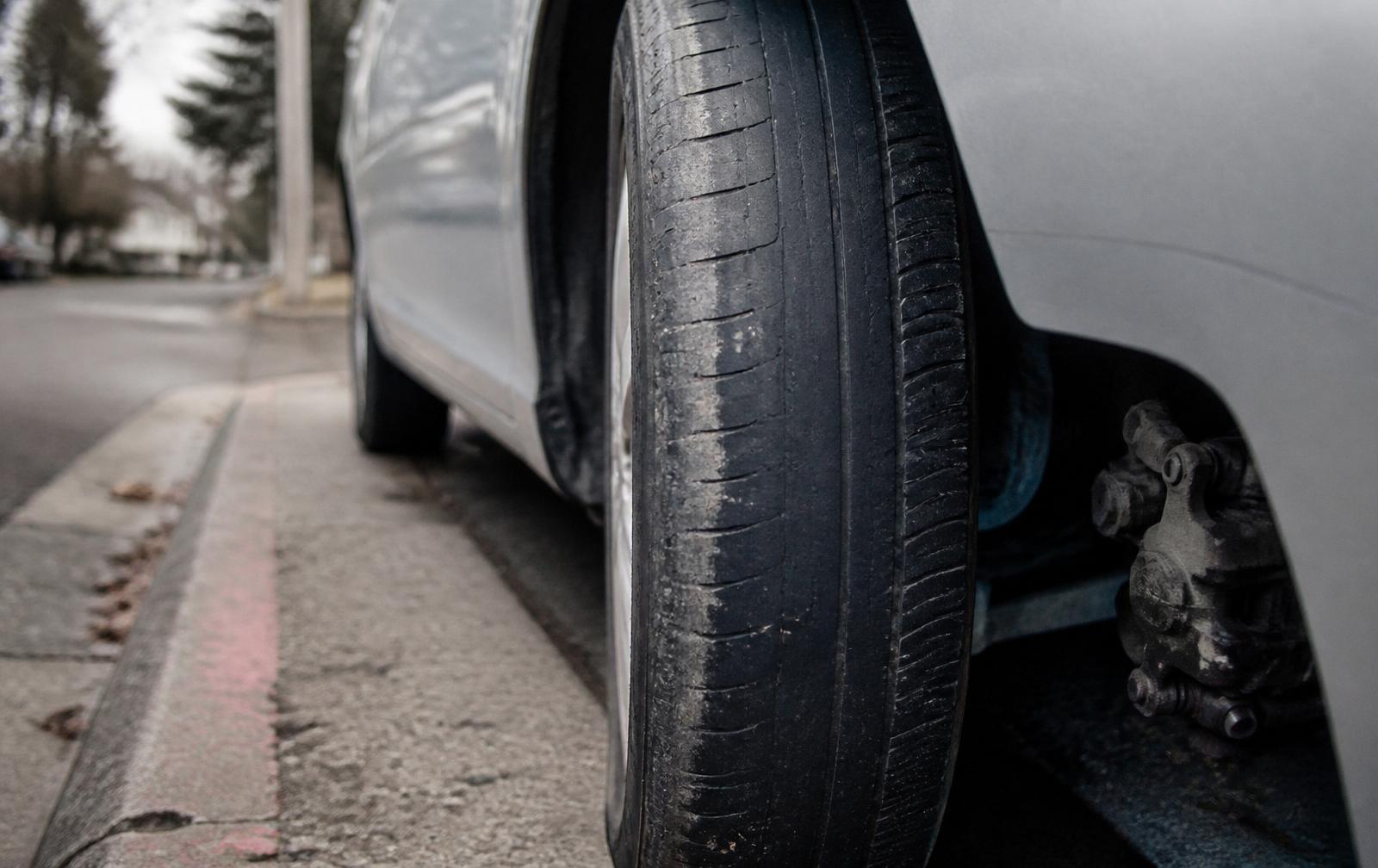
All four tyres should be the same brand or at least a matched pair per axle. Uneven wear (inside worn, outside sharp) means suspension or alignment issues — that's an inspection flag. Tread minimum for pink slip is 1.5mm across the middle 75%; if it's already borderline, you're spending $800+ on tyres in month one. Check the DOT date code on the sidewall — tyres over 6 years old are due regardless of tread.
5. Brakes (2 minutes)
Look through the wheel spokes. Front pads should have at least 5mm of friction material visible; rotors should be smooth, not deeply scored. A blue ring around the rotor = has been ridden hot recently.
6. Under the bonnet — cold engine (10 minutes)
Insist the car is cold when you arrive. Warm engines hide starting issues. Check oil colour on the dipstick (honey-brown is fine, black is overdue, milky = coolant mixed in = engine dead). Coolant should be pink/green, clean, not oily. Look for oil leaks down the back of the block, at the rocker cover, at the front timing cover.
- Oil condition — honey vs tar.
- Coolant condition — clean pink/green, not muddy.
- Belts — cracks, glazing, missing chunks.
- Battery terminals — corrosion or clean?
- Aftermarket wiring — a mess of add-on wiring is a red flag.
- Air filter — clean or clogged.
- Visible fluid leaks anywhere.
7. Cold start
You turn the key. It should fire on the first crank. Blue smoke = oil burn (turbo or valve seals). White smoke that doesn't clear in 30 seconds = coolant in the combustion chamber (head gasket). Rattling that quiets after 5 seconds = worn hydraulic lifters, usually livable. Rattling that stays = engine going.
8. Every electrical function (5 minutes)
Sit inside, methodically test: every window up and down, every mirror adjustment, air-con on full cold (feel the vent — should be genuinely cold within 90 seconds), heater on full hot, every seat function, every light on the dash, indicators, hazards, wipers on every speed, washer jets, horn, boot release, fuel flap release, central locking with the key and second key, infotainment on and off. Both keys should work — a single-key car is either a $400 replacement or a walk-away.
9. Interior wear vs kilometres (3 minutes)
The steering wheel, driver's seat bolster and gear knob wear tell you if the odometer is honest. A shiny worn steering wheel on a "80,000 km" car is a wound-back speedo until proven otherwise. Check the pedal rubbers too — new-looking pedal rubbers on an old car = replacement covering wear.
10. Service history and paperwork (5 minutes)
Ask for the log book. Stamps consistent with claimed km? Same workshop every time (good) or wildly scattered (fine, but ask why)? Cross-check the last service date against the current odometer — big gap = missed services. No service history at all is not automatically a deal killer, but the price should reflect it. Also verify: two keys, spare wheel + jack + wheel nut key, current rego papers matching the seller's name.
11. The test drive
Drive it yourself, not a passenger seat ride. Route: cold suburban, 60km/h main road, 80–100km/h stretch, one uphill under load, one full-brake stop from 60km/h in a safe spot. Feel for: pulling under brakes, vibration through the steering, gear changes that hunt or slip, ABS activating when it shouldn't, cruise control that engages and disengages cleanly, clutch bite point (manuals) high or low.
- Suburban 50 km/h — low-speed manoeuvring, steering feel, brake bite.
- Main road 60–70 km/h — gear changes under mild load, tracking straight.
- Motorway 80–100 km/h — high-speed stability, wheel balance, engine noise.
- Uphill under load — gear kick-down, engine response.
- Full-brake stop from 60 km/h — pulling, ABS engagement, no soft pedal.
- Cruise control on / off — clean engagement and disengagement.
- Reverse manoeuvre — reverse camera, sensors, transmission clunk.
12. The negotiation itself
Every item above becomes a specific dollar figure at the negotiation. "Front pads are 4mm — that's $450 in a month" is worth more off the price than "the brakes feel a bit worn". Sellers respect specifics. If your list is long, offer to book an independent pre-purchase inspection to confirm — a genuine seller says yes, a nervous one starts talking about "waiting for other buyers".
When your checklist finds something concerning
That's the moment to spend the $280. Our mobile pre-purchase mechanic comes to the seller's location with a full diagnostic scanner, paint depth gauge, brake pad gauge and PPSR check, spends 60–90 minutes on the car and hands you a written report on the spot. If the car is genuinely fine, you paid $280 for peace of mind. If it isn't, you either negotiate hard or walk away — and either outcome saves multiples of the fee.
Walk-away signals from the driveway check
- Milky oil on the dipstick (head gasket failure).
- Continuous white smoke that doesn't clear (coolant in combustion).
- Continuous blue smoke (heavy oil burn — engine on its way out).
- Loud continuous engine rattle after warm-up.
- Filler over half a panel (major body repair).
- Odometer clearly inconsistent with interior wear.
- Seller's ID doesn't match rego papers.
- Seller refuses cold start or refuses independent inspection.
- PPSR shows unresolved finance or write-off.
Frequently asked.
- Do I really need a professional inspection if I've done the driveway checklist?
- A driveway check catches the obvious deal-breakers. A qualified mechanic with a diagnostic scanner catches stored fault codes, brake pad thickness, suspension play under load, and paint depth readings that identify past accident repairs. On a $15k+ purchase, the $280 inspection is the cheapest insurance in the transaction.
- What's the single most important thing on the checklist?
- PPSR check before you view. If the car has money owing on it, has been written off, or is stolen, everything else on the list is irrelevant.
- Can I inspect a car myself at a dealer?
- Yes. Dealers expect it. Ask for the keys, the log book, and a cold start. Any dealer that refuses a cold start or won't let you test drive should be walked away from.
- How long should a proper driveway inspection take?
- 45–60 minutes plus a 20-minute test drive. Anything under 20 minutes and you've missed something.
- What if the seller won't let me get a pre-purchase inspection?
- Walk. There is no legitimate reason a private seller refuses an independent inspection they don't pay for. It's the loudest possible signal that something is wrong with the car.
- What tools do I need for a driveway inspection?
- Torch, small magnet (fridge one is fine), tyre tread depth coin, paper towel to wipe fluids, notepad to record findings, phone for photos. That's it.
- Is it OK to inspect a car in the rain?
- Rain hides paint imperfections and body repair signs. Reschedule if you can. If you can't, focus on interior wear, cold start, engine bay and paperwork — do the panel walk-around on a dry day.
- What time of day is best for viewing?
- Bright morning daylight is best for paint and body check. Avoid dusk, night, and covered garages.
- How do I check if the seller is really the owner?
- Ask to see the current rego papers (registration certificate) AND their driver's licence — names must match. Photograph both. If they refuse, walk away.
- Should I bring a mechanic friend to the viewing?
- Helpful if they know cars, but no substitute for an independent inspector with proper diagnostic equipment. A friend's visual check plus a professional pre-purchase inspection is the strongest combination.
- Can I test drive without buying?
- Yes — genuine sellers welcome test drives during daylight from a licensed driver. A seller refusing test drives is a walk-away signal.
- Do I need to sign anything before a test drive?
- Sometimes — dealers commonly ask for a copy of your driver's licence and may have a test-drive waiver. Private sellers rarely ask for anything beyond seeing the licence. Neither should ask for a deposit before the drive.
About the author
NSW Pink Slip — Lead Inspection Team
Lead AIS-Authorised eSafety Inspector · 18+ years
Our lead inspection team is Transport for NSW-authorised under the Authorised Inspection Scheme (AIS) to issue eSafety Checks (pink slips) for light vehicles up to 4.5t. Combined 18+ years of hands-on Sydney workshop experience — starting in general repair, moving through diagnostic specialisation on European and Japanese platforms, and settling into full-time mobile inspection since 2019. Every article on this site is authored or reviewed by a currently-authorised AIS examiner. If we can't verify a claim against a Transport for NSW or Service NSW source, it doesn't ship.
- ✓Transport for NSW authorised AIS examiner
- ✓Cert IV in Automotive Mechanical Diagnosis
- ✓Cert III in Light Vehicle Mechanical Technology
- ✓Cert III in Automotive Electrical Technology
- ✓Working with Children Check (WWC) verified
Reviewed by NSW Pink Slip Review Panel — Reviews every technical article for accuracy against current Transport for NSW rules, AIS inspector guidelines and manufacturer service data.
Meet the full inspection team →Related from the workshop.
Used Car Inspection Sydney 2026 — Independent Pre-Purchase Check (Flat $280 inc GST)
Pre-Purchase Car Inspection Sydney 2026 — Mobile, On-the-Spot Report ($280 Flat)