NSW Rego Inspection Report Explained 2026 — How to Read Every Code, Line & Advisory
The inspection report is the most useful piece of paper your car will produce all year — if you can read it. Here's every section, every code, every advisory type, and exactly what to do with the report after the inspector hands it over.
- Reviewed by
- NSW Pink Slip Review Panel
- Published
- 8 May 2026
- Updated
- 24 July 2026
- Read time
- 10 min
The eSafety inspection report you get after a pink slip looks technical because it is technical — it's the same form format the inspector uses to lodge to Transport for NSW. But once you know how the columns work, it becomes the single best snapshot of your car's condition. Nothing else you'll pay $179 for gives you a line-by-line list of every safety item on the vehicle, backed by government-standard criteria.
The header block
The top of every report has the vehicle identifiers: registration plate, VIN, make/model/year, odometer reading at the time of inspection, and the AIS (Authorised Inspection Scheme) station number that carried out the check. Cross-check the VIN and plate against your rego papers — if either is wrong, the electronic lodgement won't match your renewal and Service NSW will bounce it back to the inspector. Also check the odometer reading — it feeds into the vehicle's history record and future PPSR lookups.
The result codes
| Code | Meaning | What it looks like in practice |
|---|---|---|
| P | Pass | Item meets the criteria — no action needed. |
| F | Fail | Item does not meet minimum criteria — must be repaired for rego renewal. |
| A | Advisory | Item is currently legal but showing wear — worth addressing soon. |
| N/A | Not applicable | The item doesn't apply to this vehicle (e.g. fog lights on a car without them). |
A single F on the report means the whole inspection is a fail overall — you can't have a "mostly passed" pink slip. An advisory is not a fail: the car is legal today, but the inspector is flagging the item for your attention before it becomes a fail at the next inspection.
The main sections
1. Lights and electrical
All exterior lighting: headlights (low and high beam), park lights, indicators, hazards, brake lights, reverse lights, number plate lights, side markers, plus any fog lights fitted. Common fails: blown globes (30–60 seconds to fix), misaligned headlights, damaged lenses, non-compliant aftermarket LED conversions. Interior: dashboard warning lights that are currently illuminated (MIL / check engine, ABS, airbag) are automatic fails.
2. Tyres, wheels and suspension
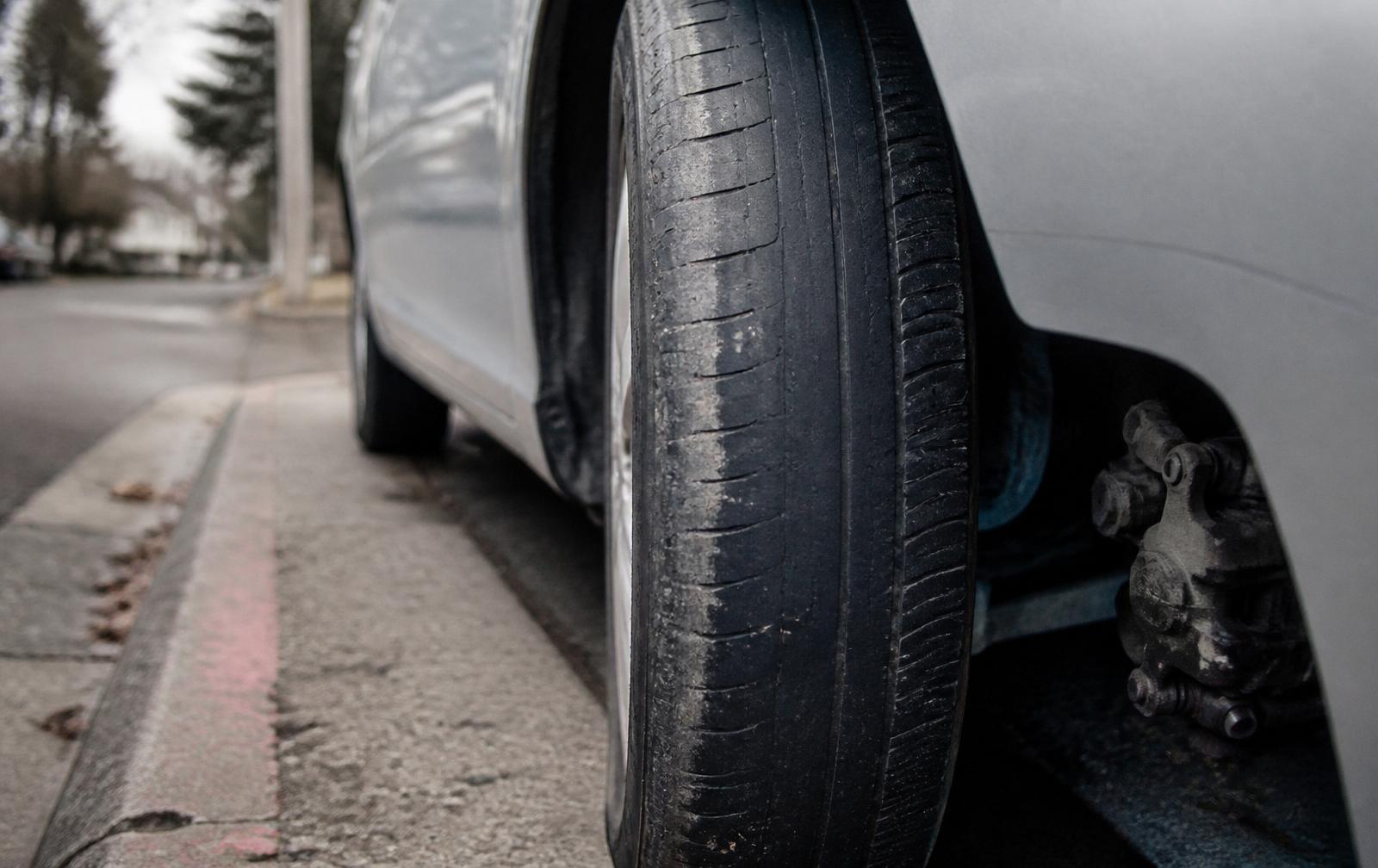
Tread depth (min 1.5 mm across the tyre), sidewall condition, matching sizes on the same axle, wheel security, and visual suspension check (worn bushes, leaking shocks). If shocks are leaking oil down the strut body, expect a fail. Bulging or exposed cords in the sidewall is an instant fail. Rim damage — bent, cracked or heavily kerbed rims — is a fail.
3. Brakes
Roller-tested where possible: front left/right, rear left/right, parking brake. The report shows braking effort as a percentage. Front-to-rear imbalance greater than 30% is a fail even if total effort is adequate. Warped discs producing shudder under braking is a fail. Leaking brake fluid or a spongy pedal is a fail. Parking brake must hold the car on a specified gradient.
4. Steering
Free play at the steering wheel, wheel bearing check, tie rod ends, ball joints. Excessive free play (typically >3 cm at the wheel rim) is a fail. Torn steering rack boots leaking grease is a fail. Wheel bearings with audible grinding or excessive lateral play is a fail.
5. Body, structure and glass
Structural rust, panel security, windscreen condition (cracks in the driver's line of sight fail), mirror mounts, door latches. Cosmetic rust is fine — structural rust in sills, chassis rails or strut towers is a fail. Non-standard window tint below 35% VLT on side windows is a fail; any tint on the windscreen apart from the top strip is a fail.
6. Seatbelts and interior
Every seatbelt tested for retraction and locking, webbing checked for damage or fraying. Horn tested for audibility. Driver's seat security tested (must be fixed to the floor, no unusual movement).
7. Emissions and driveline
Exhaust leaks before the catalytic converter (mandatory fail — carbon monoxide risk to cabin), engine warning lights (MIL), diesel smoke opacity where applicable, engine mounts, CV boot inspection for torn boots leaking grease. Excessive oil leaks that would pool under the car overnight are a fail; minor weeps are advisories.
Advisory items — the free upsell you should actually listen to
Advisories are the inspector saying "this is legal today but won't be at the next check". Common examples:
- A tyre at 2.5 mm (legal minimum 1.5 mm, so it'll be borderline in 6 months).
- Brake pads at 30% remaining — legal, but plan to replace within the year.
- A wiper that's streaking — legal because it clears water, but not for long.
- A small oil weep at the rocker cover — not pooling, not a fail, but developing.
- Battery health test showing weak cranking amps — starts today, may not next winter.
- Coolant hose showing surface cracking — not leaking, but a future failure point.
Address advisories before your next service — they're a shopping list of jobs before they turn into fails. Ignoring advisories is the single most common reason a customer fails their next annual pink slip on an item that was already flagged.
What to do with the report
- Keep the digital copy — take a photo of every page if you got paper.
- If you sell the car within 6 months, hand the report to the buyer. It's excellent used-car evidence and often justifies asking-price.
- If items failed, get quotes from your own mechanic. Cross-reference the report line by line so you're not upsold on items that weren't flagged.
- Take the repaired car back to the same station for the free re-inspection within 14 days.
- Save the report in a car folder along with service history and receipts — it forms part of a well-documented service record.
How the electronic lodgement works
Modern pink slip stations don't lodge on paper — the inspector's tablet uploads the result directly to Transport for NSW's Rego Renewal system within a minute of the tick being applied. You'll see the "eSafety Check current" status appear in your Service NSW app almost immediately. If it doesn't appear within an hour, the lodgement failed (usually a VIN mismatch) — call the inspector back before you try to renew.
What the report does NOT tell you
The pink slip report is a safety inspection, not a mechanical assessment. It won't tell you the timing belt is due, the transmission fluid is dark, the paintwork hides a previous accident, or the AC gas is low. That's what a pre-purchase inspection ($280 inc GST) covers — the checklist is roughly three times as long, includes a road test, and is designed to help you decide whether to buy the car, not just whether to renew rego.
Reading the fail list — what to fix first
- Safety-critical items first: brakes, steering, seatbelts, structural rust. Don't drive until these are fixed.
- Then legal-compliance items: lights, tyres, windscreen. Legal to drive to the fix but not much further.
- Then presentation items that were flagged (mirror mounts, wipers, horn).
- Get itemised quotes referencing the report line numbers — this stops workshop upsell.
- Book the re-inspection once all listed items are repaired; the 14-day free window covers it.
Frequently asked.
- What does the "A" mean on a NSW inspection report?
- Advisory. The item is legal today but showing wear. It's not a fail, but the inspector is flagging it for you to fix before it becomes one.
- Can I fail a pink slip and still drive the car?
- You can drive to and from the inspection and to a workshop for repairs. You can't drive it once rego expires without the pink slip lodged.
- Do I get a paper copy of the report?
- You get a written report from the inspector. The legal lodgement to Transport for NSW is electronic.
- How long is the inspection report valid?
- The pink slip result is valid for 6 months from the date of issue for the purpose of registration renewal.
- What's the difference between a pink slip report and a pre-purchase inspection report?
- The pink slip report checks pass/fail against Transport for NSW safety criteria. The pre-purchase report is a much broader mechanical, cosmetic and history assessment — designed to help you decide whether to buy the car.
- Is an advisory a fail?
- No — an advisory is a pass with a note. The car is legal to drive and legal to register. Advisories are just a heads-up so the item doesn't surprise you at the next inspection.
- How many advisories can I have and still pass?
- Unlimited — advisories don't affect the pass/fail outcome. Some older cars might have five or six advisories and still pass; the inspector is doing you a favour by listing them.
- Can the inspector lie or make up fails?
- Every pink slip inspector is audited by Transport for NSW. Falsifying a report is a serious offence carrying loss of licence to inspect and fines. If you dispute a fail, ask for a second opinion at another AIS.
- How quickly does the pass appear in Service NSW?
- Usually within minutes — often before the inspector has finished packing up. If it hasn't appeared within an hour, call the inspector back; there may be a VIN mismatch.
- Can I hand the report to a buyer as proof of condition?
- Yes — a recent pink slip report is powerful used-car evidence. It doesn't replace a pre-purchase inspection for the buyer, but it demonstrates the car passed a government-standard safety check as at the report date.
- What if I lose the report?
- The electronic lodgement to Transport for NSW is what counts for rego renewal — losing the paper doesn't affect anything. If you need a copy for a sale, call the issuing station; they can reprint from their system.
- Does the report cover mechanical items like clutch or AC?
- No — those aren't safety items. Clutch, AC, transmission health, engine internals aren't on the pink slip checklist. A pre-purchase inspection covers all of that.
About the author
NSW Pink Slip — Lead Inspection Team
Lead AIS-Authorised eSafety Inspector · 18+ years
Our lead inspection team is Transport for NSW-authorised under the Authorised Inspection Scheme (AIS) to issue eSafety Checks (pink slips) for light vehicles up to 4.5t. Combined 18+ years of hands-on Sydney workshop experience — starting in general repair, moving through diagnostic specialisation on European and Japanese platforms, and settling into full-time mobile inspection since 2019. Every article on this site is authored or reviewed by a currently-authorised AIS examiner. If we can't verify a claim against a Transport for NSW or Service NSW source, it doesn't ship.
- ✓Transport for NSW authorised AIS examiner
- ✓Cert IV in Automotive Mechanical Diagnosis
- ✓Cert III in Light Vehicle Mechanical Technology
- ✓Cert III in Automotive Electrical Technology
- ✓Working with Children Check (WWC) verified
Reviewed by NSW Pink Slip Review Panel — Reviews every technical article for accuracy against current Transport for NSW rules, AIS inspector guidelines and manufacturer service data.
Meet the full inspection team →Related from the workshop.
What Fails a Pink Slip in NSW? The 12 Items That Cost Most Drivers a Re-Inspection (2026)
The 6 Most Common Pink Slip Fails in Sydney (and How to Fix Each Under $50)